Cocoa Bean Fermentation Explained: Process, Microbiology, and Quality
Cocoa bean fermentation is one of the most important stages in cocoa production. It helps develop the flavor precursors, aroma potential, and physical characteristics that influence the quality of cocoa beans used by chocolate manufacturers and cocoa processors.
Although cocoa beans come from the cacao tree, freshly harvested beans do not automatically have the characteristic chocolate flavor expected in finished cocoa products. That flavor develops through a combination of post harvest fermentation and subsequent processing, particularly roasting.
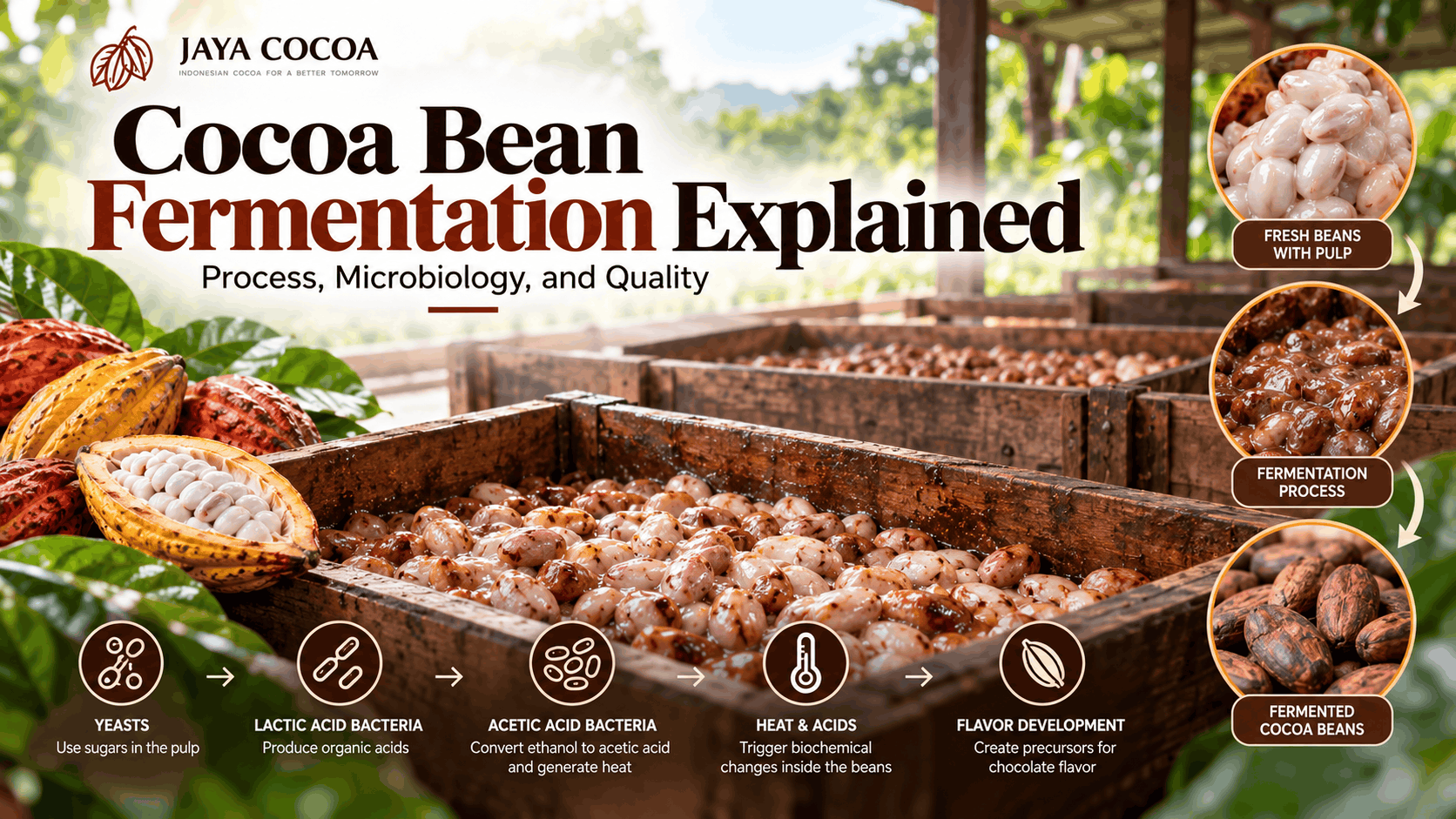
During fermentation, naturally occurring microorganisms transform the sugary pulp surrounding the beans. The resulting heat, acids, and biochemical changes trigger reactions inside the beans that help develop their characteristic brown color and flavor potential.
For cocoa farmers, exporters, processors, and ingredient buyers, understanding fermentation is essential for evaluating raw material quality and building a more consistent cocoa supply chain.
In this guide, we explain how cocoa bean fermentation works, which microorganisms are involved, how fermentation affects quality, and what buyers should consider when sourcing cocoa beans.
1. What Is Cocoa Bean Fermentation?
Cocoa bean fermentation is a post-harvest process in which microorganisms act on the pulp surrounding freshly extracted cocoa beans. The process generates heat and metabolic products that contribute to important biochemical changes inside the beans.
Fresh cocoa beans are surrounded by a moist, sugary pulp, sometimes called mucilage. After the beans are removed from ripe cocoa pods, the pulp-bean mass is collected in heaps, baskets, trays, or fermentation boxes.
Under suitable conditions, naturally occurring yeasts and bacteria become active. Their metabolic activity changes the composition of the pulp and produces compounds that influence the developing cocoa flavor.
Fermentation also helps prepare the beans for drying and subsequent processing.
According to the International Cocoa Organization (ICCO), good chocolate flavor develops through two important stages: appropriate fermentation on the farm and further flavor development during factory processing, particularly roasting.
Key point: Fermentation does not create the final chocolate flavor on its own. It develops precursors that are transformed further during roasting and other processing operations.
Reference: International Cocoa Organization — Processing Cocoa
2. Why Is Cocoa Bean Fermentation Important?
Proper fermentation affects several characteristics that matter to cocoa processors and chocolate manufacturers.
Flavor development
Fermentation promotes the formation of flavor precursors, including amino acids, peptides, and reducing sugars. During roasting, these compounds participate in reactions that generate many of the characteristic aromas associated with chocolate.
Insufficient fermentation can leave beans with pronounced bitterness, astringency, and less-developed cocoa flavor.
Color development
Fermentation contributes to changes in the internal color of cocoa beans. Well-fermented beans commonly develop brown internal coloration, although the final appearance depends on cocoa genetics, fermentation conditions, and subsequent drying and processing.
Reduction of bitterness and astringency
Biochemical changes during fermentation help reduce some of the compounds and sensory characteristics associated with excessive bitterness and astringency. The degree of improvement varies with the raw material and process.
Pulp removal and preparation for drying
Microbial activity breaks down the pulp surrounding the beans, allowing it to drain away. Fermentation is followed by drying, which reduces moisture and prepares the beans for storage and transportation.
Quality consistency
Fermentation conditions influence the consistency of the resulting beans. Variations in temperature, turning, bean quantity, pulp condition, and fermentation duration can produce differences between batches.
Research has identified temperature and pH profiles as important variables associated with fermentation dynamics and final cocoa quality.
Reference: Dynamics of Cocoa Fermentation and Its Effect on Quality — Scientific Reports (2021)
3. How Does Cocoa Bean Fermentation Work?
Cocoa fermentation is a microbial process involving successive changes in the dominant microorganisms and the chemical environment of the pulp-bean mass.
The process is often described in stages, but these stages overlap. Their timing depends on the cocoa variety, climate, fermentation method, batch size, and handling practices.
Stage 1: Yeast activity
At the beginning of fermentation, yeasts use sugars present in the cocoa pulp. They produce ethanol and other metabolites while contributing to the breakdown of the pulp.
Some yeasts also produce enzymes that help break down pectin, reducing pulp viscosity and allowing the material to drain more readily.
The initial microbial activity helps establish conditions for subsequent stages.
Stage 2: Lactic acid bacteria activity
Lactic acid bacteria (LAB) also contribute to the fermentation of sugars and organic acids in the pulp bean mass.
Depending on the species and available substrates, their activity can produce lactic acid and other metabolites. These products contribute to changes in the chemical environment and interact with the activities of other microorganisms.
Lactic acid bacteria do not act independently of the rest of the microbial community. Their activity is influenced by temperature, acidity, oxygen availability, and the composition of the fermenting material.
Stage 3: Acetic acid bacteria activity
As fermentation progresses and oxygen becomes more available, acetic acid bacteria (AAB) oxidize ethanol produced during earlier microbial activity into acetic acid.
This reaction generates heat. Acetic acid and rising temperatures help create conditions that affect the living tissues inside the cocoa beans.
The combined effects of heat, acids, and biochemical reactions contribute to the development of flavor precursors.
Stage 4: Biochemical changes inside the beans
The heat and acids generated during fermentation penetrate the beans and contribute to the loss of embryo viability. Enzymatic and chemical reactions then change the bean’s internal composition.
Proteins are broken down into smaller peptides and amino acids, while changes in carbohydrates and other compounds contribute to the pool of precursors involved in flavor development.
These compounds become particularly important during roasting, when additional reactions produce the aromas associated with cocoa and chocolate.
Scientific references:
- Schwan and Wheals (2004) — The Microbiology of Cocoa Fermentation and Its Role in Chocolate Quality
- De Vuyst and Weckx (2016) — The Cocoa Bean Fermentation Process: From Ecosystem Analysis to Starter Culture Development
- Functional Role of Yeasts, Lactic Acid Bacteria, and Acetic Acid Bacteria in Cocoa Fermentation Processes (2020)
4. How Long Does Cocoa Bean Fermentation Take?
Cocoa bean fermentation commonly takes approximately three to seven days, although the appropriate duration varies according to the cocoa type and processing conditions.
Some fermentation systems use shorter periods, while others require longer processing to achieve the desired characteristics.
Factors affecting fermentation duration include:
- Cocoa variety and genetics
- Ripeness and condition of harvested pods
- Pulp quantity and composition
- Fermentation method and batch size
- Temperature development
- Frequency and timing of turning
- Oxygen availability and drainage
- Desired flavor profile and quality requirements
For example, the International Cocoa Organization describes differences in typical fermentation duration between some cocoa types. However, these examples should not be treated as universal specifications for every origin or production system.
Longer fermentation does not automatically mean better cocoa. Insufficient fermentation can limit flavor development, while excessive fermentation under unsuitable conditions can cause undesirable flavors and quality deterioration.
Producers should determine the endpoint using a combination of process monitoring, cut tests, sensory assessment, and other suitable quality checks rather than relying on time alone.
Reference: ICCO — Harvesting and Post-Harvest
5. Common Cocoa Fermentation Methods
The choice of fermentation method depends on the scale of production, local practices, available infrastructure, and desired control over the process.
Heap fermentation
In heap fermentation, freshly extracted cocoa beans are piled together and commonly covered with banana leaves or other suitable covering materials.
The method is widely associated with smallholder production. Heat accumulates within the mass, while the pulp drains and microbial activity progresses.
Heap fermentation can be practical where equipment is limited, but temperature distribution and aeration may be less uniform if the pile is poorly managed.
Box fermentation
Box fermentation uses wooden boxes or similar suitable containers to hold the cocoa pulp-bean mass.
Boxes can help producers manage batch size, drainage, turning, and handling. Multiple boxes may be used to facilitate transfers during fermentation.
The design, dimensions, material, and management practices influence the temperature profile and consistency of the process.
Basket or tray fermentation
Baskets and trays may be used in some local production systems, especially for smaller batches. The suitability of these methods depends on whether they can retain sufficient heat and support appropriate drainage and fermentation conditions.
Very small batches may lose heat too quickly for satisfactory fermentation unless the process is specifically adapted.
Controlled or starter-culture fermentation
Some producers and researchers investigate selected microbial cultures and more controlled fermentation conditions to improve reproducibility.
Starter cultures may help direct microbial activity, but their performance depends on the cocoa material, process conditions, and compatibility of the selected microorganisms with the fermentation environment.
Controlled fermentation does not eliminate the need for hygienic handling, proper drying, and quality testing.
Research reference: The Cocoa Bean Fermentation Process: From Ecosystem Analysis to Starter Culture Development
6. What Happens When Cocoa Beans Are Under-Fermented?
Under-fermentation occurs when the process does not produce sufficient changes in the beans to achieve the desired characteristics.
Possible indicators and consequences include:
- Purple or slate-colored internal beans, depending on cocoa type and other factors
- Less-developed cocoa flavor
- Greater perceived bitterness and astringency
- Inconsistent flavor between batches
- Reduced suitability for applications requiring a well-developed chocolate flavor profile
However, internal color alone is not a complete assessment of quality. The interpretation of cut-test results should consider the cocoa type, buyer specification, and other quality indicators.
For manufacturers, a high proportion of under-fermented beans can create challenges in producing a consistent finished product.
7. What Happens When Cocoa Beans Are Over-Fermented?
Over-fermentation occurs when fermentation continues beyond the appropriate endpoint or develops under unsuitable conditions.
Potential consequences include:
- Unwanted acidic or fermented notes
- Putrid or other off-flavors
- Changes in the expected flavor profile
- Greater variation in product quality
- Reduced suitability for certain customer specifications
The outcome depends on the microbial conditions and how the beans are handled before and during drying.
It is important to distinguish desirable fermentation-derived acidity from excessive acidity or undesirable off-flavors. A single measurement cannot describe the full sensory quality of a cocoa batch.
Good process control aims to achieve the required flavor development while minimizing undesirable fermentation characteristics.
8. Temperature, pH, and Turning: Important Control Factors
Fermentation is influenced by several interacting variables. Monitoring only the number of days is insufficient for understanding how a batch is progressing.
Temperature
Microbial metabolism generates heat within the cocoa mass. Depending on the system, temperatures may rise to approximately 40–50°C.
Temperature influences microbial succession and the biochemical changes taking place in the beans. Differences in batch size, insulation, ambient conditions, and turning practices can produce different temperature profiles.
pH and acidity
The pH of the pulp-bean mass changes during fermentation as microorganisms produce and consume organic compounds.
Acids, including acetic acid, contribute to the changes that occur inside the beans. However, pH and titratable acidity measure different properties and should not be treated as interchangeable.
Turning and aeration
Turning redistributes the beans and increases oxygen availability within the mass. This can influence the activity of acetic acid bacteria and help improve uniformity.
The correct timing and frequency depend on the fermentation system. Turning too early, too late, or too frequently may alter the process in undesirable ways.
Drainage and pulp condition
Effective drainage allows liquefied pulp to escape and influences the environment in which microorganisms operate.
Poor drainage or unsuitable handling can create inconsistent conditions and affect the quality of the resulting beans.
Research reference: Dynamics of Cocoa Fermentation and Its Effect on Quality
9. Fermentation Must Be Followed by Proper Drying
Fermentation and drying are separate but closely connected post-harvest operations.
After fermentation, cocoa beans still contain substantial moisture. Drying reduces moisture to a level appropriate for safe handling and storage under suitable conditions.
The International Cocoa Organization describes reducing bean moisture to approximately 7.5% as an important post-harvest objective. Actual acceptance limits and handling requirements should be confirmed against the buyer’s specification and applicable standards.
Drying too quickly may limit the completion of some desirable changes and leave excessive acidity. Drying too slowly under unsuitable conditions can encourage mold growth and undesirable flavors.
During drying, beans should be spread and turned as appropriate to promote uniform moisture removal. They must also be protected from contamination and adverse weather conditions.
Drying does not compensate for poor fermentation, and good fermentation does not eliminate the need for proper drying.
Reference: ICCO — Harvesting and Post-Harvest
10. How Can Buyers Evaluate Fermented Cocoa Beans?
For cocoa exporters, processors, and international buyers, fermentation quality should be evaluated using clear and agreed criteria.
Cut test
A cut test involves cutting representative beans and examining their internal appearance. It can help identify characteristics associated with fermentation, including internal color and certain visible defects.
The sampling procedure and acceptance criteria should be agreed upon in advance. Results from a small, unrepresentative sample may not reflect the entire lot.
Sensory evaluation
Sensory assessment can identify flavor characteristics such as cocoa intensity, acidity, bitterness, astringency, and undesirable notes.
The evaluation should use a suitable protocol and, where appropriate, trained assessors. Roasting and sample preparation must be standardized because they influence the results.
Physical quality
Buyers may assess bean size, uniformity, broken beans, flat beans, foreign matter, insect damage, and other physical defects.
These factors affect processing performance and may be part of the commercial specification.
Moisture content
Moisture testing helps evaluate whether beans are suitable for storage and transportation. High moisture under unsuitable storage conditions can increase the risk of mold and deterioration.
Traceability and documentation
Buyers should request information about origin, harvest period, fermentation method, drying method, batch identification, storage conditions, and applicable test results.
The exact requirements depend on the destination market, buyer expectations, and intended use.
11. Why Cocoa Fermentation Matters to Cocoa Powder Manufacturers
Fermentation takes place before industrial cocoa processing, but its effects remain relevant throughout the value chain.
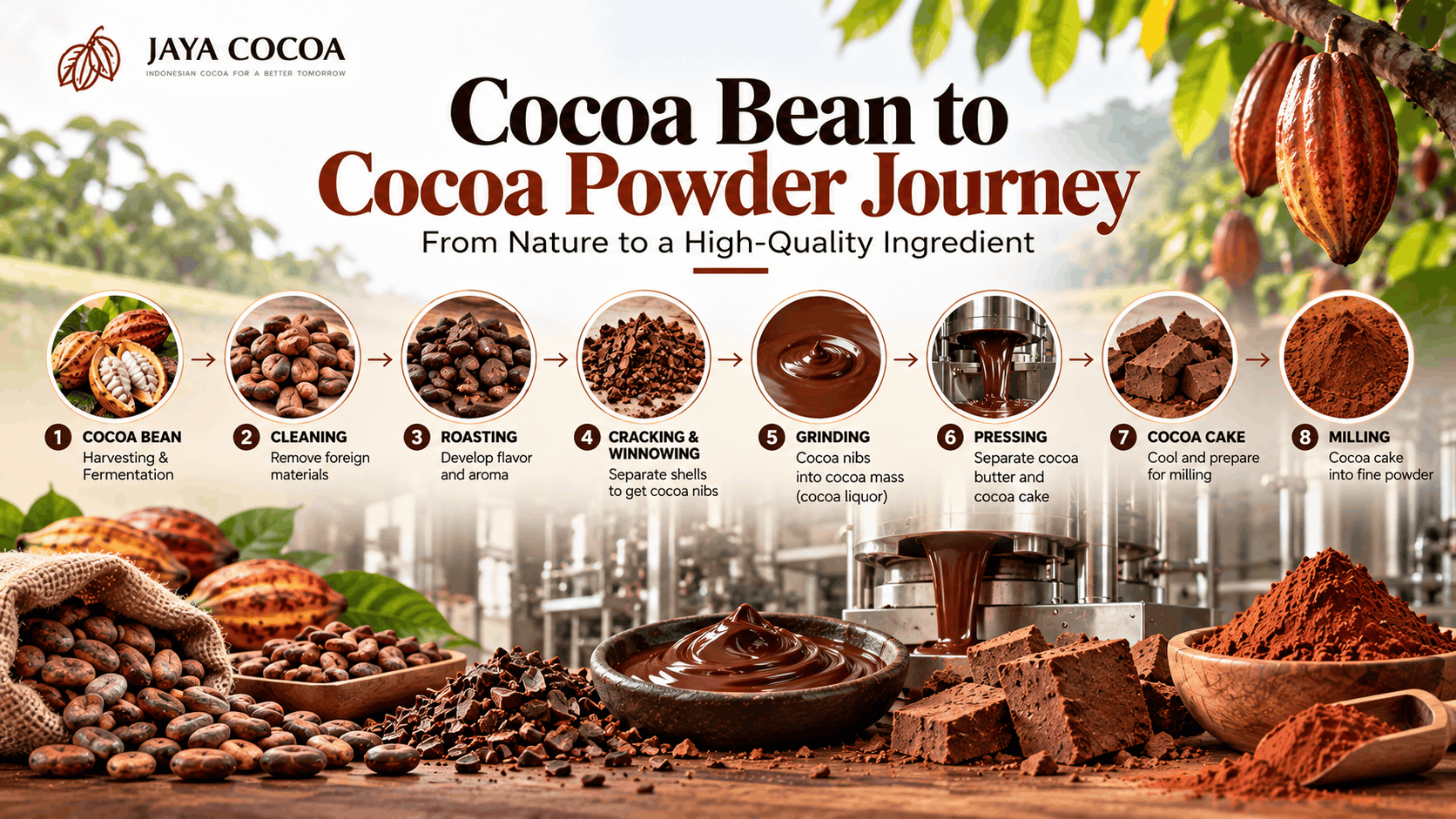
After the beans arrive at a processing facility, they may undergo cleaning, roasting, cracking, winnowing, grinding, pressing, and milling, depending on the intended product.
Fermentation influences the flavor potential of the raw material entering this process. Roasting then develops additional aroma and flavor characteristics.
For cocoa powder buyers, this means that the finished product’s performance and sensory profile depend on more than the powder’s color, pH, or fat content. The quality of the original beans and their post-harvest handling also matter.
Manufacturers should therefore consider raw-material traceability, process control, and sensory quality alongside technical specifications when evaluating cocoa powder supply.
For further reading, explore our related guides on cocoa processing, cocoa powder specifications, and natural versus alkalized cocoa powder.
12. Frequently Asked Questions About Cocoa Bean Fermentation
Is cocoa bean fermentation necessary?
Fermentation is an important post-harvest process for developing the flavor precursors associated with conventional cocoa and chocolate production. The appropriate process depends on the intended product and the buyer’s requirements.
How many days should cocoa beans be fermented?
Many cocoa fermentation systems operate for approximately three to seven days. The appropriate duration depends on the cocoa material, method, environmental conditions, and desired quality.
Which microorganisms are involved in cocoa fermentation?
Yeasts, lactic acid bacteria, and acetic acid bacteria are major groups involved in the process. Their relative activity changes as the fermentation environment develops.
Does fermentation make cocoa beans safe by itself?
No. Fermentation is not a substitute for food-safety controls. Proper hygiene, drying, storage, contaminant management, and appropriate testing remain essential.
Can under-fermented beans still be processed?
They can be processed, but their sensory characteristics may be less suitable for products that require well-developed cocoa flavor. Suitability depends on the intended application and the buyer’s specification.
Does longer fermentation always produce better cocoa?
No. Both insufficient and excessive fermentation can lead to undesirable characteristics. Process conditions and the quality endpoint are more important than duration alone.
Conclusion
Cocoa bean fermentation is a complex biological and biochemical process that plays a major role in the development of cocoa flavor potential and post-harvest quality.
Through the activity of yeasts, lactic acid bacteria, and acetic acid bacteria, the pulp surrounding freshly extracted beans is transformed, heat and acids develop, and biochemical reactions occur inside the beans.
The results depend on fermentation method, temperature, acidity, aeration, drainage, duration, and the quality of the original cocoa material.
For farmers, exporters, processors, and ingredient buyers, understanding fermentation helps support better quality assessment, more consistent sourcing, and more informed purchasing decisions.
At Jaya Cocoa, we recognize that cocoa quality begins long before the beans reach the processing line. Understanding the origin and post-harvest history of cocoa is an important part of evaluating raw materials and developing consistent cocoa ingredients for food manufacturers.
References
- International Cocoa Organization (ICCO). Processing Cocoa.
https://www.icco.org/processing-cocoa/ - International Cocoa Organization (ICCO). Harvesting and Post-Harvest.
https://www.icco.org/harvesting-post-harvest-new/ - Schwan, R. F., & Wheals, A. E. (2004). The Microbiology of Cocoa Fermentation and Its Role in Chocolate Quality. Critical Reviews in Food Science and Nutrition.
https://pubmed.ncbi.nlm.nih.gov/15462126/ - De Vuyst, L., & Weckx, S. (2016). The Cocoa Bean Fermentation Process: From Ecosystem Analysis to Starter Culture Development. Journal of Applied Microbiology.
https://pubmed.ncbi.nlm.nih.gov/26743883/ - Functional Role of Yeasts, Lactic Acid Bacteria, and Acetic Acid Bacteria in Cocoa Fermentation Processes. (2020). FEMS Microbiology Reviews.
https://pubmed.ncbi.nlm.nih.gov/32420601/ - Dynamics of Cocoa Fermentation and Its Effect on Quality. (2021). Scientific Reports.
https://pmc.ncbi.nlm.nih.gov/articles/PMC8373873/