Cocoa Powder pH Explained
When selecting cocoa powder for industrial food production, manufacturers often focus on color, fat content, or flavor. However, another specification plays an equally important role pH.
The pH of cocoa powder influences not only its acidity but also its color, flavor profile, solubility, compatibility with leavening agents, and performance in different food applications.
For food manufacturers, importers, and product developers, understanding cocoa powder pH is essential for selecting the right ingredient and ensuring consistent product quality.
What Is pH?
pH is a scientific measurement used to determine whether a substance is acidic, neutral, or alkaline. The pH scale ranges from 0 to 14:
| pH Range | Classification |
|---|---|
| Below 7 | Acidic |
| 7 | Neutral |
| Above 7 | Alkaline |
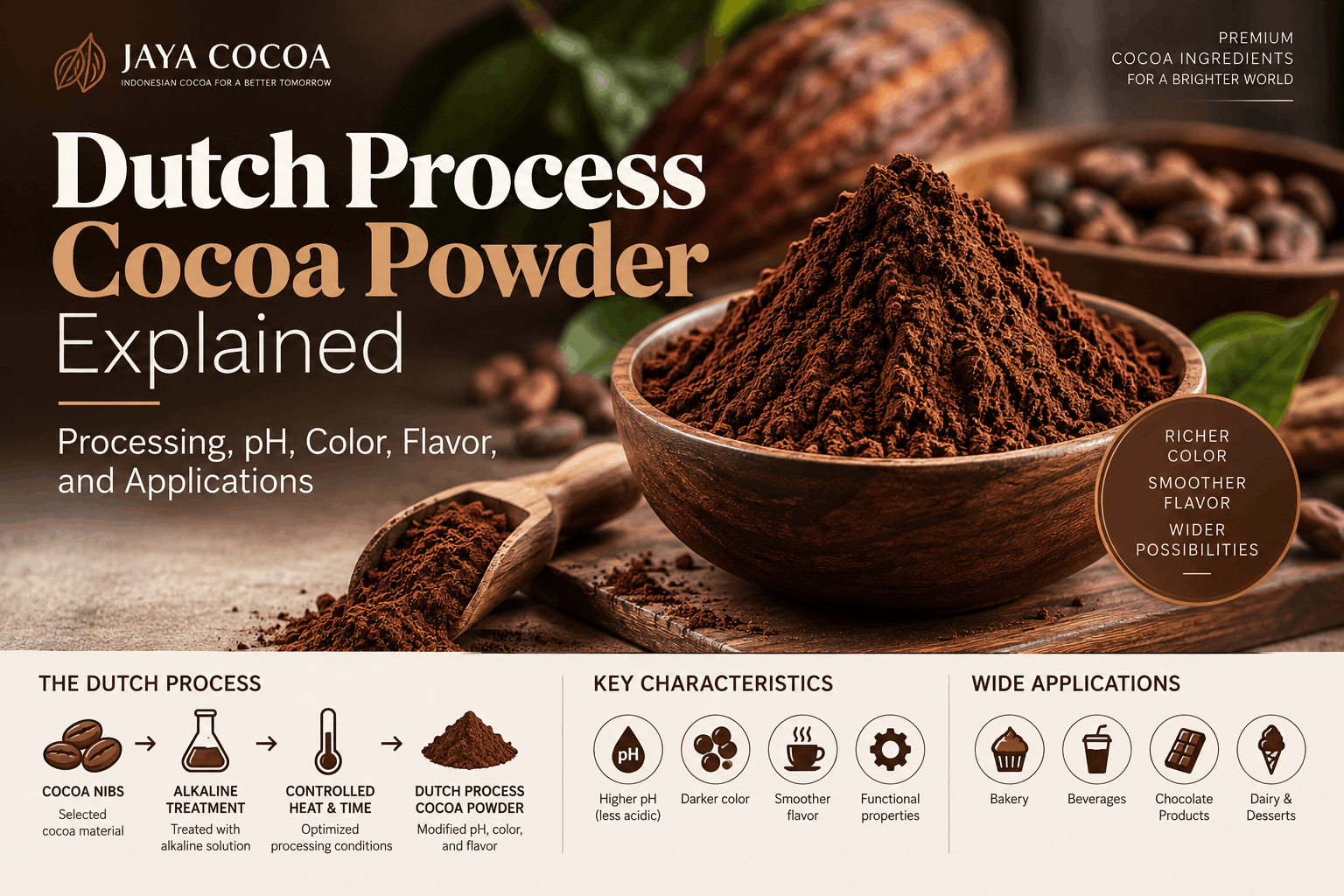
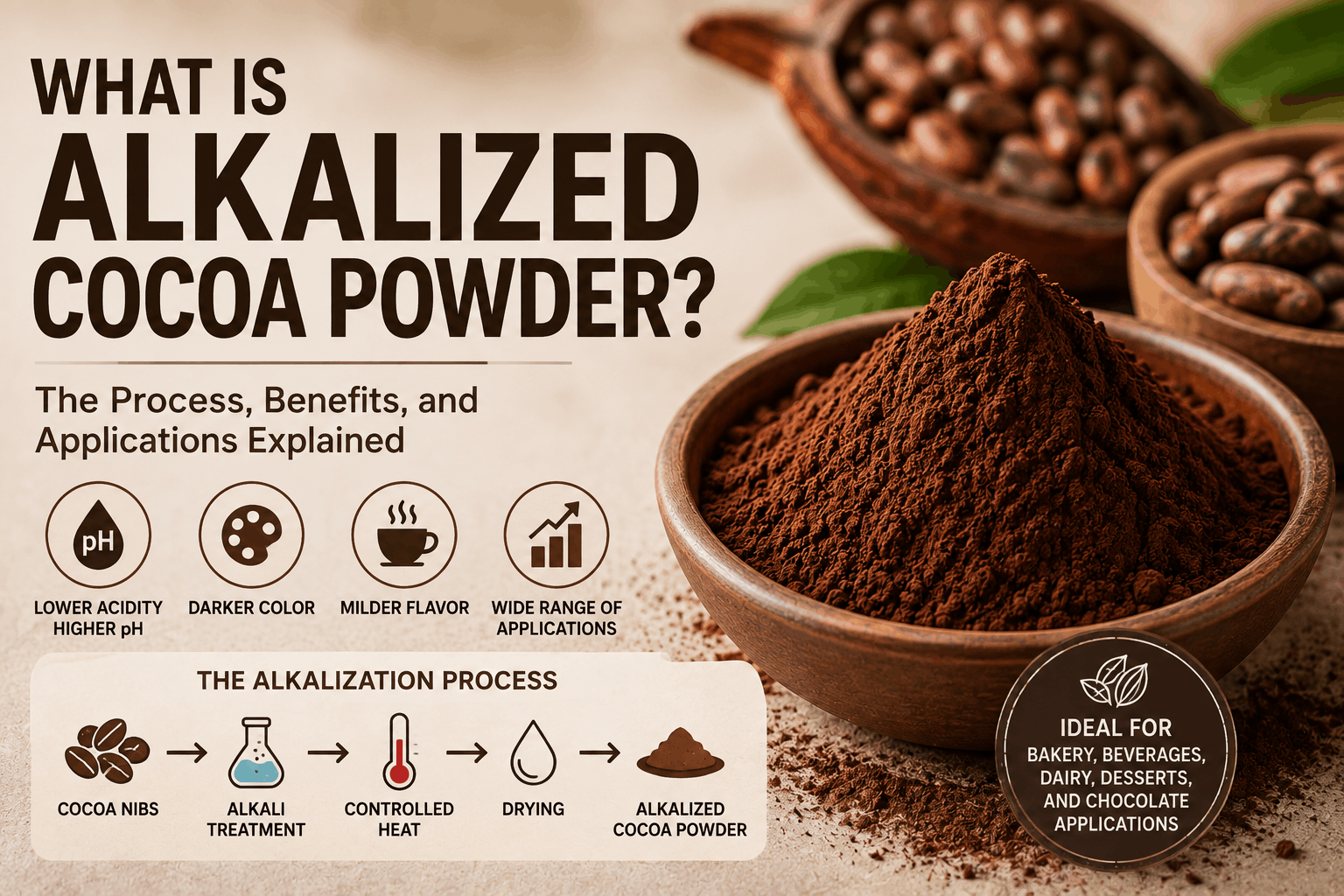
Natural cocoa powder is naturally acidic because organic acids remain after fermentation and processing. During alkalization (Dutch process), approved alkaline agents are used to neutralize part of this acidity, resulting in cocoa powder with a higher pH.
Typical pH of Cocoa Powder
Although exact values vary among manufacturers and processing conditions, cocoa powders are generally classified as follows:
| Cocoa Powder Type | Typical pH |
|---|---|
| Natural Cocoa Powder | 5.2–5.8 |
| Light Alkalized Cocoa | 6.0–6.5 |
| Medium Alkalized Cocoa | 6.5–7.0 |
| Strong Alkalized Cocoa | 7.0–8.0+ |
The degree of alkalization determines how much the pH increases and directly affects color and flavor.
Why pH Matters
Many buyers assume pH only indicates acidity. In reality, pH affects several important product characteristics.
1. Flavor
Natural cocoa powder generally has:
- Brighter cocoa notes
- Fruity acidity
- Slight bitterness
Alkalized cocoa powder offers:
- Milder chocolate flavor
- Reduced acidity
- Smoother taste
As alkalization increases, cocoa becomes less acidic and develops a mellower flavor profile.
2. Color
One of the most noticeable effects of pH is color.
Generally:
- Lower pH → lighter brown cocoa powder
- Higher pH → darker brown to black cocoa powder
Manufacturers often choose alkalized cocoa when they require darker products such as premium cookies, sandwich biscuits, chocolate drinks, or ice cream.
3. Solubility and Dispersion
Alkalization also improves the dispersion of cocoa powder in liquids.
Compared with natural cocoa powder, alkalized cocoa generally:
- Mixes more easily
- Produces fewer lumps
- Performs better in beverage applications
This is one reason many instant chocolate drink manufacturers prefer alkalized cocoa powder.
4. Baking Performance
pH also influences baking chemistry.
Natural cocoa powder is acidic and reacts with baking soda (sodium bicarbonate) to produce carbon dioxide, helping baked products rise.
Alkalized cocoa powder has reduced acidity and is commonly used in formulations relying on baking powder or other balanced leavening systems.
Using the wrong cocoa powder may affect cake volume, crumb texture, and flavor balance.
How Is Cocoa Powder pH Increased?
The increase in pH occurs during alkalization, also known as the Dutch process.
Manufacturers treat cocoa material with approved food grade alkaline compounds such as potassium carbonate or sodium carbonate under controlled conditions.
The process is carefully managed because factors such as:
- Type of alkali
- Concentration
- Temperature
- Processing time
- Moisture content
all influence the final pH, color, and flavor of the cocoa powder.
Does Higher pH Mean Better Cocoa Powder?
No.
A higher pH does not automatically indicate higher quality.
Instead, the appropriate pH depends on the intended application.
For example:
| Product | Recommended Cocoa Type |
|---|---|
| Chocolate Cake | Natural or Light Alkalized |
| Brownies | Medium Alkalized |
| Chocolate Drink | Medium to Strong Alkalized |
| Ice Cream | Medium Alkalized |
| Cookies | Natural or Alkalized depending on formulation |
| Biscuit Filling | Strong Alkalized |
The best cocoa powder is the one that meets the technical requirements of the product not simply the one with the highest pH.
pH and Product Specifications
Professional buyers rarely evaluate pH alone.
A complete specification typically includes:
- pH
- Fat content
- Moisture
- Particle size
- Color
- Microbiological limits
- Heavy metal compliance
These parameters together determine the suitability of cocoa powder for industrial production.
Why Food Manufacturers Should Request pH Information
When sourcing cocoa powder, buyers should request a Certificate of Analysis (COA) from the supplier.
The COA confirms whether the cocoa powder consistently meets the required pH specification for production.
Consistent pH helps manufacturers maintain:
- Stable product quality
- Consistent flavor
- Uniform product color
- Reliable processing performance
Conclusion
The pH of cocoa powder is far more than a laboratory measurement it is a key quality parameter that influences flavor, color, solubility, baking performance, and overall product functionality.
Natural cocoa powder typically has a pH around 5.2–5.8, while alkalized cocoa powder may range from 6.0 to above 8.0, depending on the degree of processing.
Rather than choosing the highest or lowest pH, food manufacturers should select cocoa powder based on their formulation requirements, processing conditions, and desired product characteristics.
Understanding cocoa powder pH enables manufacturers and buyers to make more informed sourcing decisions and achieve consistent product performance.
Frequently Asked Questions (FAQ)
What is the pH of natural cocoa powder?
Natural cocoa powder typically has a pH between 5.2 and 5.8, making it mildly acidic.
Why does alkalized cocoa have a higher pH?
Because it undergoes the Dutch process, where approved alkaline compounds reduce the natural acidity of cocoa.
Does pH affect cocoa powder color?
Yes. In general, higher pH levels produce darker cocoa powders, while lower pH levels result in lighter brown colors.
Can natural and alkalized cocoa powder be substituted?
Not always. Recipes using baking soda generally require natural cocoa powder, while alkalized cocoa is commonly used with baking powder or in products where leavening reactions are less critical.
References
- International Cocoa Organization (ICCO). Processing Cocoa.
- American Society of Baking. Cocoa Alkalization.
- Koc, Y., et al. (2024). Influence of Process Conditions of Alkalization on Quality of Cocoa Powder. LWT – Food Science and Technology, Elsevier.
- De Taeye, C., et al. Changes in Cocoa Properties Induced by the Alkalization Process: A Review. Comprehensive Reviews in Food Science and Food Safety. (Dikutip dalam pembahasan ilmiah mengenai perubahan sifat fisikokimia selama alkalisasi.)