
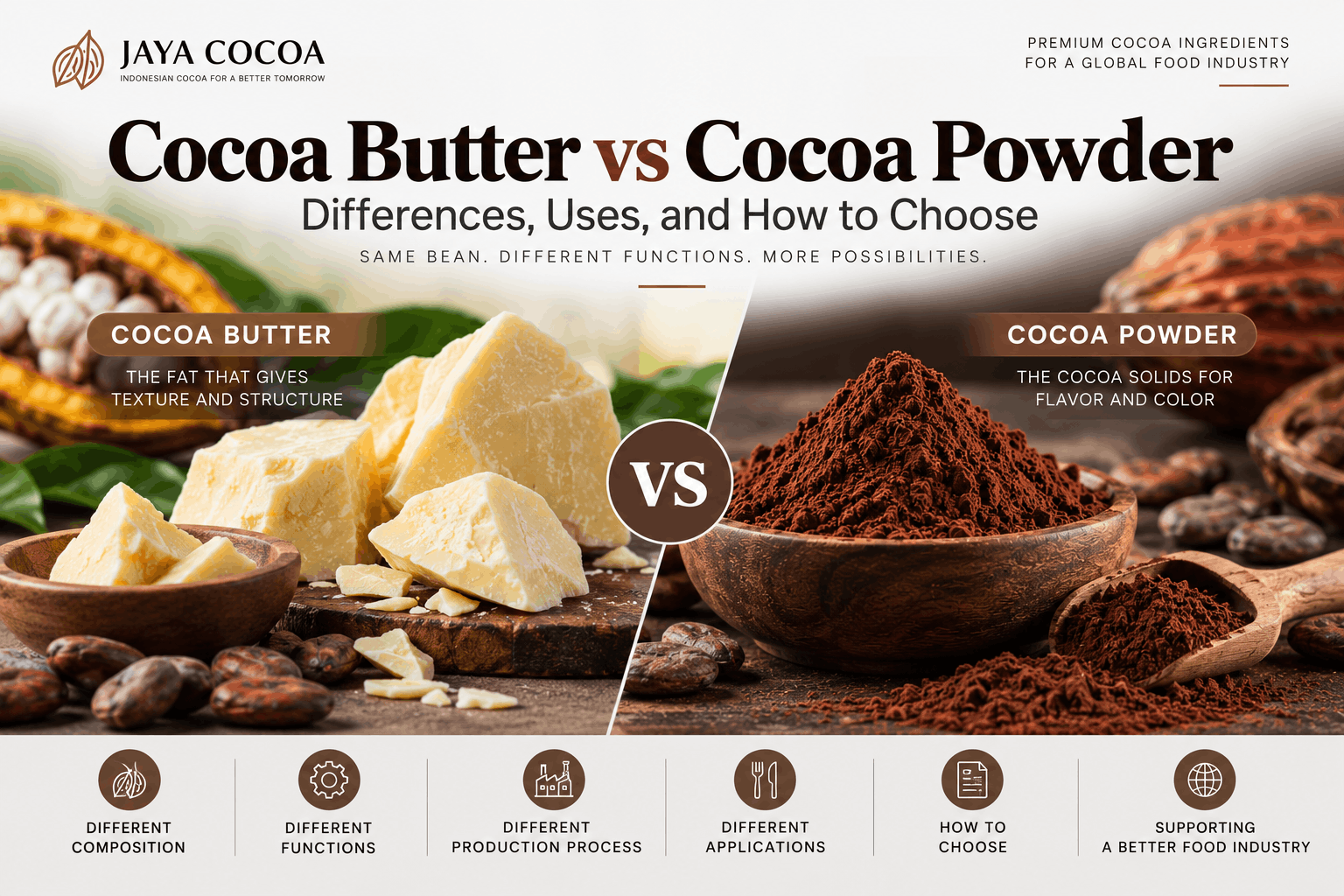
Cocoa Butter vs Cocoa Powder: Differences, Uses, and How to Choose Cocoa butter and cocoa powder are two of the most important ingredients derived from cocoa beans, but they serve very different functions in food manufacturing. Cocoa butter is the fat fraction obtained from cocoa liquor, while cocoa powder is produced from the cocoa cake remaining after part of the cocoa butter has been removed. Because they come from different fractions of the same cocoa-processing stream, their physical properties, functionality, and applications are significantly different. For food manufacturers, understanding the difference between cocoa butter and cocoa powder is important when developing chocolate, bakery products, beverages, desserts, confectionery, and other cocoa-based formulations. This guide explains the differences between cocoa butter and cocoa powder, how each is produced, their key characteristics, common applications, and what buyers should consider when selecting either ingredient. What Is Cocoa Butter? Cocoa butter is the fat naturally present in cocoa beans. During cocoa processing, fermented and dried cocoa beans are cleaned, roasted, and processed into cocoa nibs. The nibs are then ground into cocoa liquor, also known as cocoa mass or cocoa/chocolate liquor. The cocoa liquor contains both cocoa solids and cocoa fat. Through pressing, the cocoa butter is separated from the solid portion. According to the International Cocoa Organization (ICCO), cocoa butter is one of the products obtained from pressing cocoa liquor and is an important ingredient in chocolate manufacturing. Cocoa butter is therefore primarily used when a formulation requires cocoa fat, melting characteristics, texture, or chocolate-processing functionality. What Is Cocoa Powder? Cocoa powder is the powdered cocoa material produced after cocoa liquor has been pressed and the resulting cocoa cake has been broken and milled. The amount of cocoa butter remaining in the powder depends on the degree of pressing and the specification of the product. The Codex standard for cocoa powders classifies cocoa powder according to cocoa butter content, including: Product classification Cocoa butter content Cocoa powder ≥20% Fat-reduced cocoa powder ≥10% and <20% Highly fat-reduced cocoa powder <10% The same Codex standard specifies a maximum moisture content of 7% for products covered by the standard. Cocoa powder is primarily used to provide cocoa flavor, color, and cocoa solids to food formulations. How Cocoa Butter and Cocoa Powder Are Produced The easiest way to understand the difference is to look at where they appear in the cocoa-processing chain. Cocoa beans ↓ Fermentation and drying ↓ Roasting and processing ↓ Cocoa nibs ↓ Grinding ↓ Cocoa liquor ↓ Pressing ↙︎ ↘︎ Cocoa Butter Cocoa Cake ↓ Grinding ↓ Cocoa Powder This relationship is important because cocoa butter and cocoa powder are not unrelated cocoa ingredients. They are two different fractions obtained from the same cocoa-processing stage. ICCO describes the pressing of cocoa liquor as the point at which cocoa butter is separated and cocoa cake is formed. The cake can subsequently be broken and milled according to the required end use. Cocoa Butter vs Cocoa Powder: Key Differences The most important differences are related to composition, physical form, functionality, and application. Characteristic Cocoa Butter Cocoa Powder Main component Cocoa fat Cocoa solids with residual cocoa butter Physical form Solid/semi-solid fat Fine powder Primary function Fat, texture, melting behavior Cocoa flavor, color, cocoa solids Production Pressed from cocoa liquor Milled from cocoa cake Fat level Predominantly cocoa fat Lower fat than cocoa liquor Main applications Chocolate, confectionery, fillings, coatings Bakery, beverages, desserts, mixes Color contribution Limited compared with cocoa powder Important formulation characteristic Flavor contribution Cocoa aroma and fat-soluble flavor characteristics Strong cocoa flavor contribution Formulation role Structural and textural ingredient Cocoa solids and flavor ingredient The distinction is especially important in industrial formulation. A manufacturer generally cannot substitute cocoa powder for cocoa butter on a 1:1 functional basis, because the two ingredients contribute very different properties to a formulation. Cocoa Butter vs Cocoa Powder: Composition Cocoa Butter Cocoa butter is predominantly the fat fraction of cocoa. Its functionality comes from its fat composition and melting behavior. This makes it particularly important in chocolate and confectionery systems where the fat phase affects texture, mouthfeel, melting, and processing. ICCO notes that cocoa butter is used in chocolate manufacturing and can also be involved in adjusting chocolate viscosity during standardization. Typical functional roles include: Providing cocoa fat Contributing to chocolate texture Influencing melting behavior Contributing to mouthfeel Helping control chocolate viscosity Supporting confectionery coatings and fillings Cocoa Powder Cocoa powder contains cocoa solids together with a controlled amount of residual cocoa butter. The remaining fat level is an important commercial specification because it influences the powder’s formulation behavior and characteristics. For example, a higher-fat cocoa powder and a highly fat-reduced cocoa powder can behave differently in bakery, beverage, and dry-mix applications. Codex recognizes different cocoa powder categories based on cocoa butter content, reinforcing the importance of fat level when specifying cocoa powder. Cocoa Butter vs Cocoa Powder in Chocolate Manufacturing Chocolate manufacturing is one of the clearest examples of why the two ingredients should not be treated as interchangeable. ICCO identifies cocoa liquor, cocoa butter, and sugar as major ingredients used in chocolate production. Cocoa butter can also be used during standardization to adjust viscosity. Cocoa butter contributes: Fat phase Melting behavior Texture Mouthfeel Viscosity control Chocolate structure Cocoa powder can contribute: Cocoa flavor Cocoa solids Color Cocoa character In some formulations, both ingredients may be used together because they perform different jobs. For example, a chocolate or compound-style formulation may require a controlled fat phase while also requiring a specific level of cocoa solids and color. Cocoa Butter vs Cocoa Powder in Bakery Products Cocoa powder is commonly used in bakery applications such as: Cakes Brownies Cookies Biscuits Muffins Chocolate fillings Cake premixes It provides cocoa flavor and color while also contributing cocoa solids to the formulation. Cocoa butter can have a different role. It may be used in: Chocolate coatings Bakery fillings Confectionery layers Chocolate decorations Specialty fat systems The correct ingredient therefore depends on what the formulation is trying to achieve.
