Cocoa Powder Applications Across Different Industries
Cocoa powder is far more than a chocolate flavoring ingredient. Today, it is one of the most versatile food ingredients used across numerous industries, from bakery and beverages to dairy, confectionery, nutraceuticals, and foodservice.
For food manufacturers, selecting the appropriate cocoa powder involves more than choosing a color or flavor. Technical characteristics such as fat content, pH, particle size, color, dispersibility, and flavor profile directly influence product quality, manufacturing efficiency, and consumer acceptance.
As global demand for chocolate-flavored products continues to expand, cocoa powder remains an essential ingredient in product innovation and premium food manufacturing. Its versatility allows manufacturers to develop products that meet changing consumer preferences for taste, appearance, functionality, and clean-label formulations.
Why Cocoa Powder Is Widely Used
Food manufacturers choose cocoa powder because it delivers several functional and commercial advantages:
- Rich chocolate flavor
- Natural brown to black color
- Consistent product quality
- Wide compatibility with different formulations
- Good processing performance
- Long shelf life when stored correctly
- Availability in multiple technical specifications
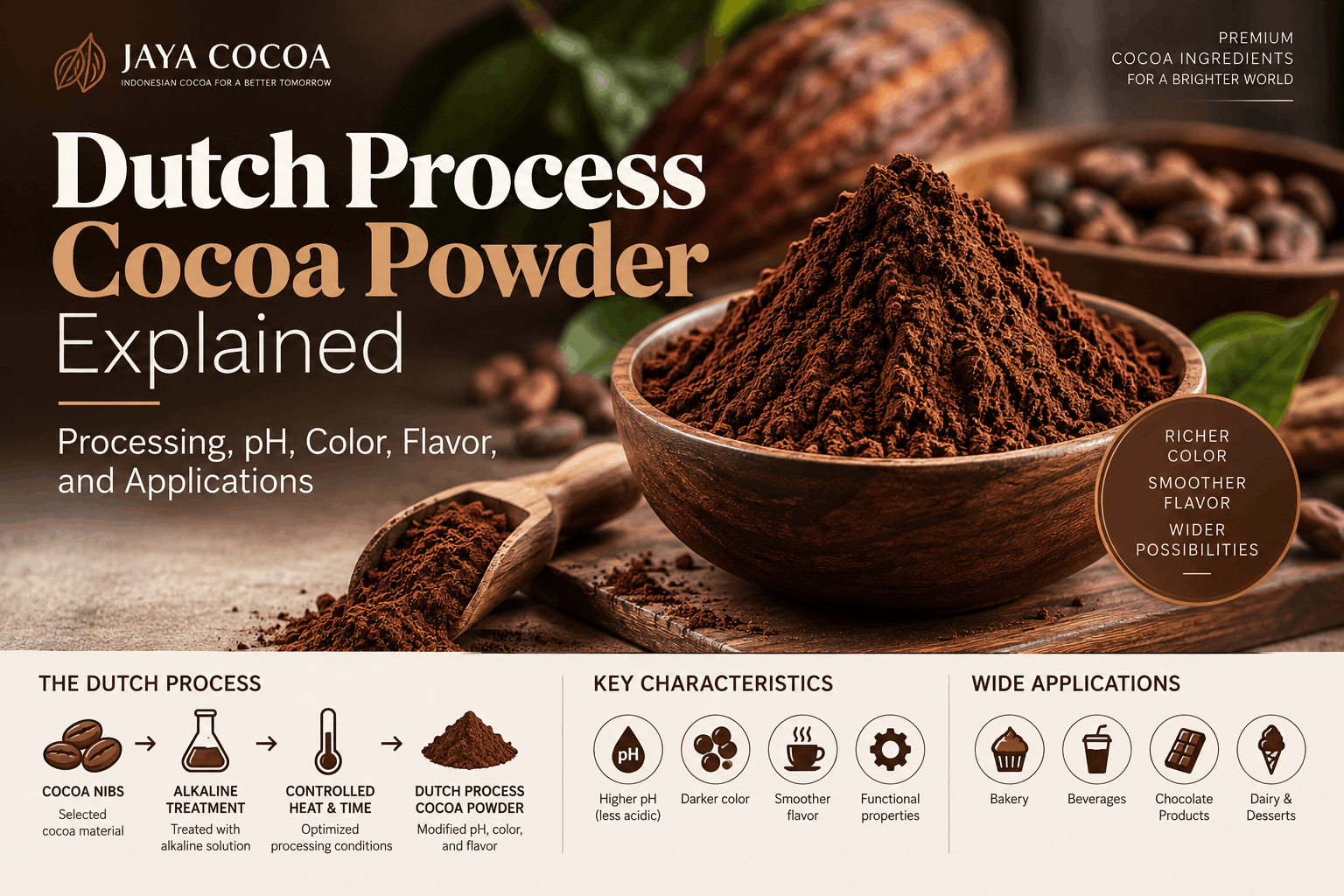
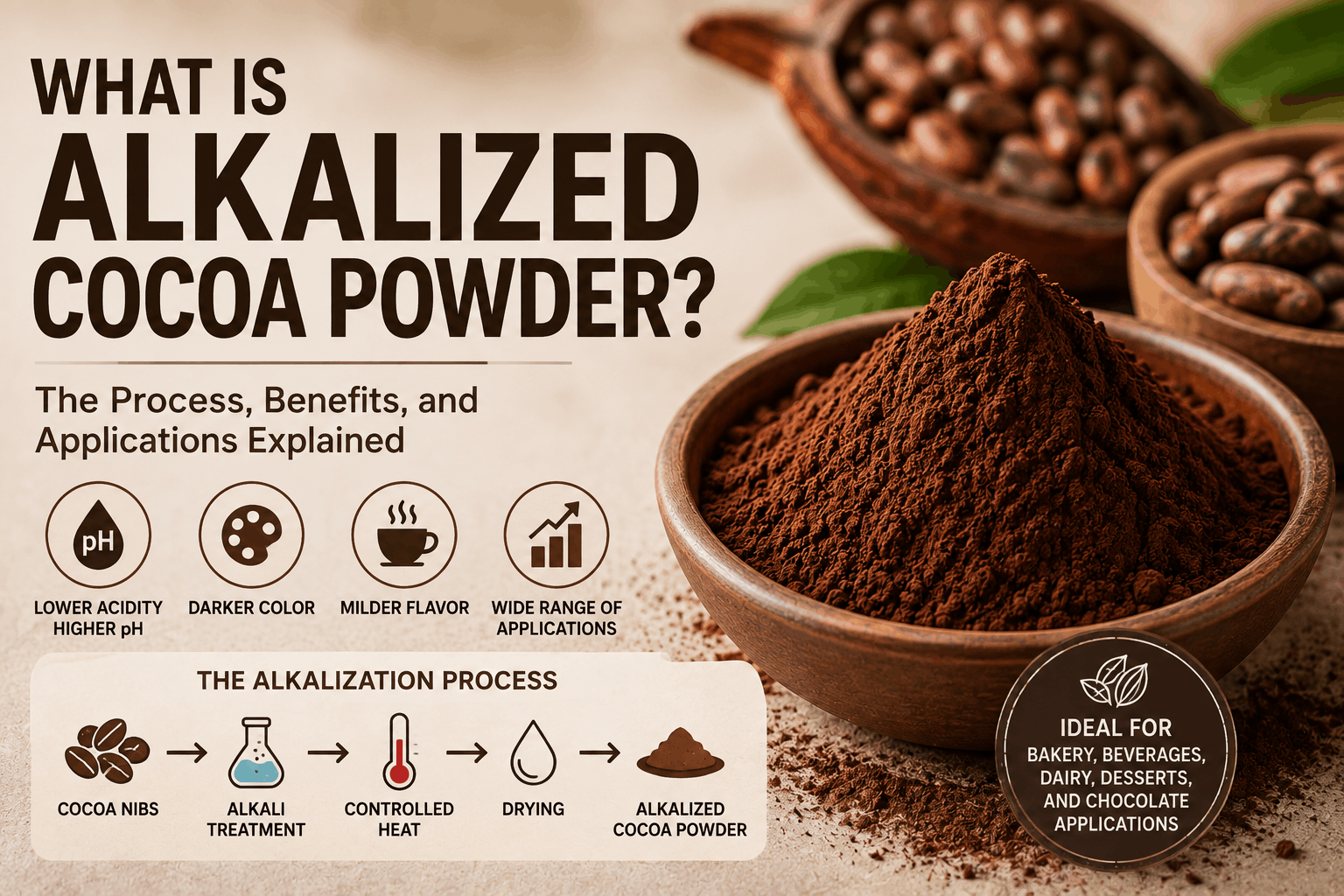
Depending on the production process, manufacturers can select natural or alkalized cocoa powder with different fat contents and color intensities to match specific product requirements.
Major Industries That Use Cocoa Powder
1. Bakery Industry
The bakery sector is one of the largest consumers of cocoa powder worldwide.
Common bakery applications include:
- Cakes
- Brownies
- Muffins
- Cookies
- Biscuits
- Donuts
- Pastries
- Bread with chocolate flavor
Natural cocoa powder is often preferred in recipes using baking soda, while alkalized cocoa powder is selected for darker color and smoother flavor.
Manufacturers evaluate cocoa powder based on color consistency, flavor stability, and compatibility with the overall formulation.
2. Beverage Industry
Chocolate beverages represent one of the fastest-growing application segments for cocoa powder.
Examples include:
- Instant chocolate drinks
- Hot chocolate
- Ready-to-drink beverages
- Chocolate milk
- Protein beverages
- Functional nutrition drinks
For beverage applications, dispersibility and solubility are especially important. Lightly to moderately alkalized cocoa powders are commonly selected because they disperse more easily and provide a smoother taste.
3. Dairy Industry
Cocoa powder is widely incorporated into dairy products to deliver chocolate flavor, color, and visual appeal.
Typical products include:
- Chocolate milk
- Yogurt
- Ice cream
- Frozen desserts
- Dairy-based puddings
- Milkshakes
Manufacturers balance cocoa powder color, fat content, and flavor intensity to achieve consistent sensory quality across production batches.
4. Confectionery Industry
Chocolate confectionery remains one of the most important markets for cocoa-derived ingredients.
Although chocolate bars rely primarily on cocoa liquor and cocoa butter, cocoa powder is extensively used in:
- Chocolate fillings
- Compound coatings
- Truffles
- Chocolate spreads
- Chocolate creams
- Coated confectionery
Different cocoa powder specifications help manufacturers achieve the desired appearance and flavor while optimizing formulation costs.
5. Snack Food Industry
Demand for chocolate-flavored snacks continues to grow worldwide.
Cocoa powder is commonly found in:
- Breakfast cereals
- Granola
- Snack bars
- Protein bars
- Extruded snacks
- Crackers
- Filled biscuits
The choice of cocoa powder depends on flavor intensity, color, processing conditions, and product positioning.
6. Dessert Industry
Premium dessert manufacturers frequently use cocoa powder because it provides a concentrated chocolate flavor without adding excessive fat.
Applications include:
- Chocolate mousse
- Tiramisu
- Custards
- Dessert sauces
- Cheesecake
- Chocolate toppings
- Bakery fillings
Dark alkalized cocoa powder is often selected for premium desserts requiring a rich visual appearance.
7. Nutraceutical and Functional Food Industry
Growing consumer interest in wellness has encouraged manufacturers to develop cocoa-based functional products.
Examples include:
- Protein powders
- Meal replacements
- Functional beverage mixes
- Sports nutrition products
- High-fiber formulations
While cocoa powder contributes flavor and color, it also naturally contains bioactive compounds such as flavanols, although processing conditions can influence their levels. Manufacturers should evaluate ingredient specifications according to product objectives and regulatory requirements.
Choosing the Right Cocoa Powder for Each Industry
Different applications require different technical specifications.
| Industry | Recommended Cocoa Powder Characteristics |
|---|---|
| Bakery | Natural or lightly alkalized, balanced color, suitable pH |
| Beverages | Light to medium alkalized, excellent dispersibility |
| Dairy | Medium alkalized, smooth flavor, stable color |
| Confectionery | Medium to dark alkalized, strong chocolate profile |
| Snacks | Cost-efficient flavor and color consistency |
| Desserts | Dark alkalized, rich appearance, smooth flavor |
| Functional Foods | Specification depends on formulation and processing goals |
Rather than using one cocoa powder for every product, manufacturers typically match ingredient specifications to the functional requirements of each formulation.
Key Factors Buyers Should Evaluate
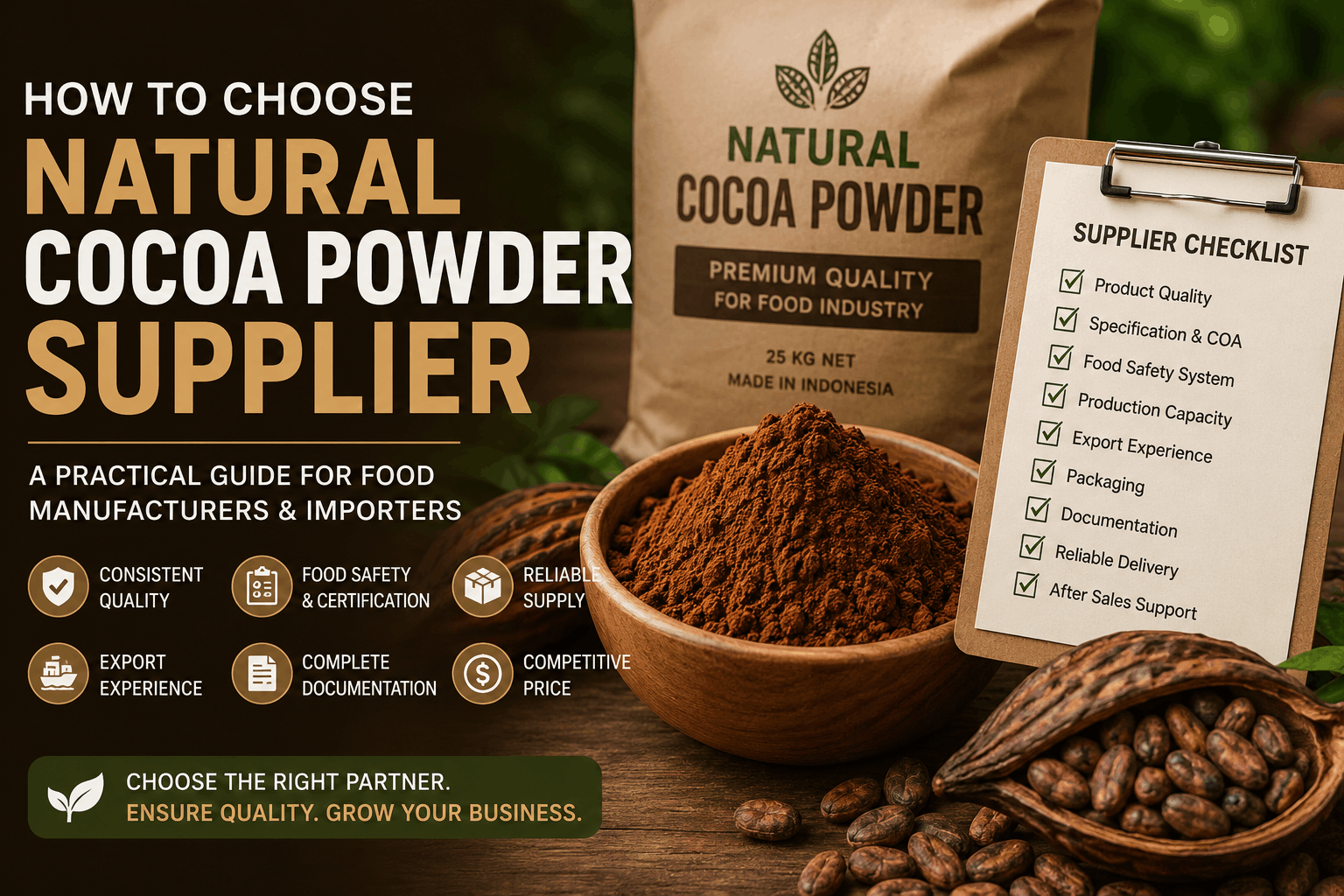
When sourcing cocoa powder, professional buyers should request:
- Certificate of Analysis (COA)
- Product Specification Sheet
- Fat content
- pH
- Color
- Moisture
- Particle size
- Microbiological results
- Heavy metal compliance
- Allergen information (where applicable)
Reviewing these parameters helps ensure consistent quality and manufacturing performance.
The Future of Cocoa Powder Applications
The future of cocoa powder extends well beyond traditional chocolate products.
Several industry trends are expected to increase demand for technically specialized cocoa powders:
Premiumization
Consumers increasingly seek premium chocolate experiences with richer flavor, deeper color, and higher-quality ingredients.
Functional Foods
Manufacturers are incorporating cocoa into products positioned around nutrition, protein enrichment, and wellness, while balancing taste and formulation requirements.
Clean Label Development
Many food companies are reformulating products with simpler ingredient lists, increasing demand for ingredients that provide both flavor and natural color.
Plant-Based Foods
Chocolate-flavored plant-based beverages, dairy alternatives, and vegan desserts continue to expand globally, creating additional opportunities for cocoa powder.
Product Innovation
R&D teams are using cocoa powder in hybrid products, ready-to-drink beverages, high-protein snacks, frozen desserts, and premium bakery concepts to differentiate their offerings.
Conclusion
Cocoa powder has evolved into one of the most versatile ingredients in modern food manufacturing. Its applications extend across bakery, beverages, dairy, confectionery, snacks, desserts, and functional nutrition, making it an essential ingredient for manufacturers worldwide.
Selecting the right cocoa powder requires more than choosing a supplier. Manufacturers should evaluate technical specifications such as fat content, pH, color, particle size, and processing performance to ensure the ingredient aligns with product requirements.
As consumer demand for premium, innovative, and sustainable food products continues to grow, cocoa powder will remain a strategic ingredient supporting product development across multiple industries.
Frequently Asked Questions (FAQ)
What industries use cocoa powder?
Cocoa powder is widely used in the bakery, beverage, dairy, confectionery, snack, dessert, and functional food industries.
Which cocoa powder is best for beverages?
Lightly to moderately alkalized cocoa powder is commonly selected because it offers better dispersibility, smoother flavor, and darker color than natural cocoa powder.
Can one cocoa powder be used for every application?
Not always. Different products require different specifications for fat content, pH, color, flavor, and particle size.
Why is cocoa powder important in food manufacturing?
Cocoa powder provides chocolate flavor, color, functional performance, and formulation flexibility across a wide range of food products, making it one of the most important cocoa-derived ingredients in the global food industry.
References
- International Cocoa Organization (ICCO). Processing Cocoa – Explains cocoa processing and the production of cocoa liquor, cocoa butter, and cocoa powder, as well as industrial uses of cocoa-derived ingredients.
- Encyclopedia of Food Sciences and Nutrition. Cocoa: Production, Products, and Use (ScienceDirect Topics) – Summarizes cocoa powder applications in beverages, dairy, frozen desserts, bakery, and confectionery.
- FAO/WHO Codex Alimentarius. GSFA Food Category 05.1.1 – Cocoa Mixes (Powders) and Cocoa Mass/Cake– Defines cocoa powder and its role as an ingredient in food manufacturing.
- Beckett, S. T., Fowler, M. S., & Ziegler, G. R. (2017). Beckett’s Industrial Chocolate Manufacture and Use (5th ed.). Wiley-Blackwell.
- Afoakwa, E. O. (2016). Chocolate Science and Technology (2nd ed.). Wiley-Blackwell.