Natural vs Alkalized Cocoa Powder: What’s the Difference?
Not all cocoa powder is the same. One of the most common questions from food manufacturers, bakers, beverage producers, and importers is whether they should choose natural cocoa powder or alkalized cocoa powder (also known as Dutch-process cocoa).
Although both products originate from the same cocoa beans, they differ in processing, acidity, color, flavor, solubility, and end-use applications. Choosing the wrong type may affect the taste, appearance, texture, and performance of the final product.
This guide explains the differences between natural and alkalized cocoa powder to help manufacturers and buyers select the most suitable option for their products.
What Is Natural Cocoa Powder?
Natural cocoa powder is produced by pressing cocoa liquor to remove most of its cocoa butter and then grinding the remaining cocoa cake into a fine powder. It does not undergo alkalization, so it retains its natural acidity and original cocoa characteristics.
Key Characteristics
- Light to medium brown color
- Naturally acidic (typically pH 5.0–6.0)
- Strong, fruity, and slightly bitter chocolate flavor
- High cocoa aroma
- Reacts with baking soda in baked products
Natural cocoa powder is commonly used when recipes require acidity to activate chemical leavening agents such as baking soda.
What Is Alkalized Cocoa Powder?
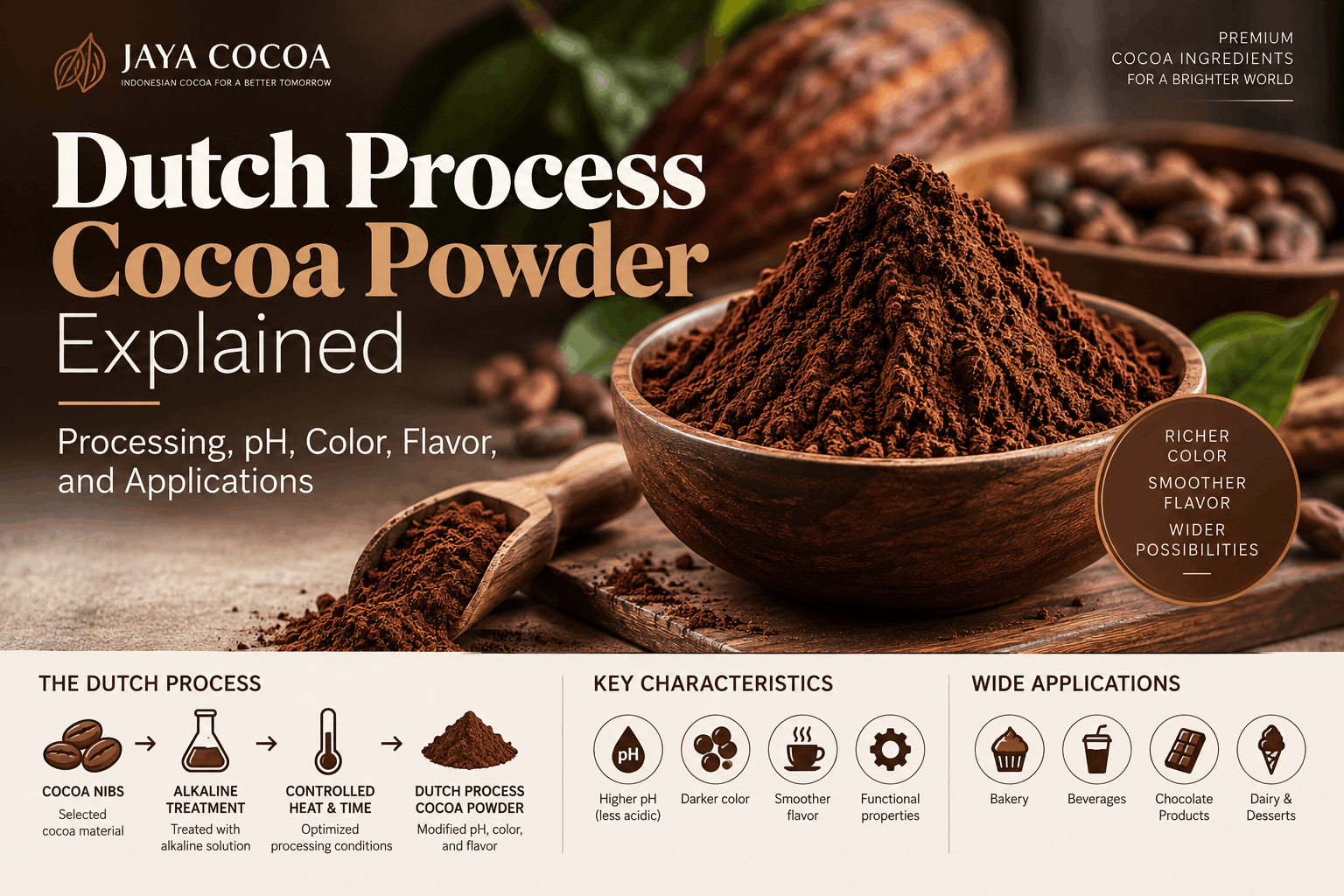
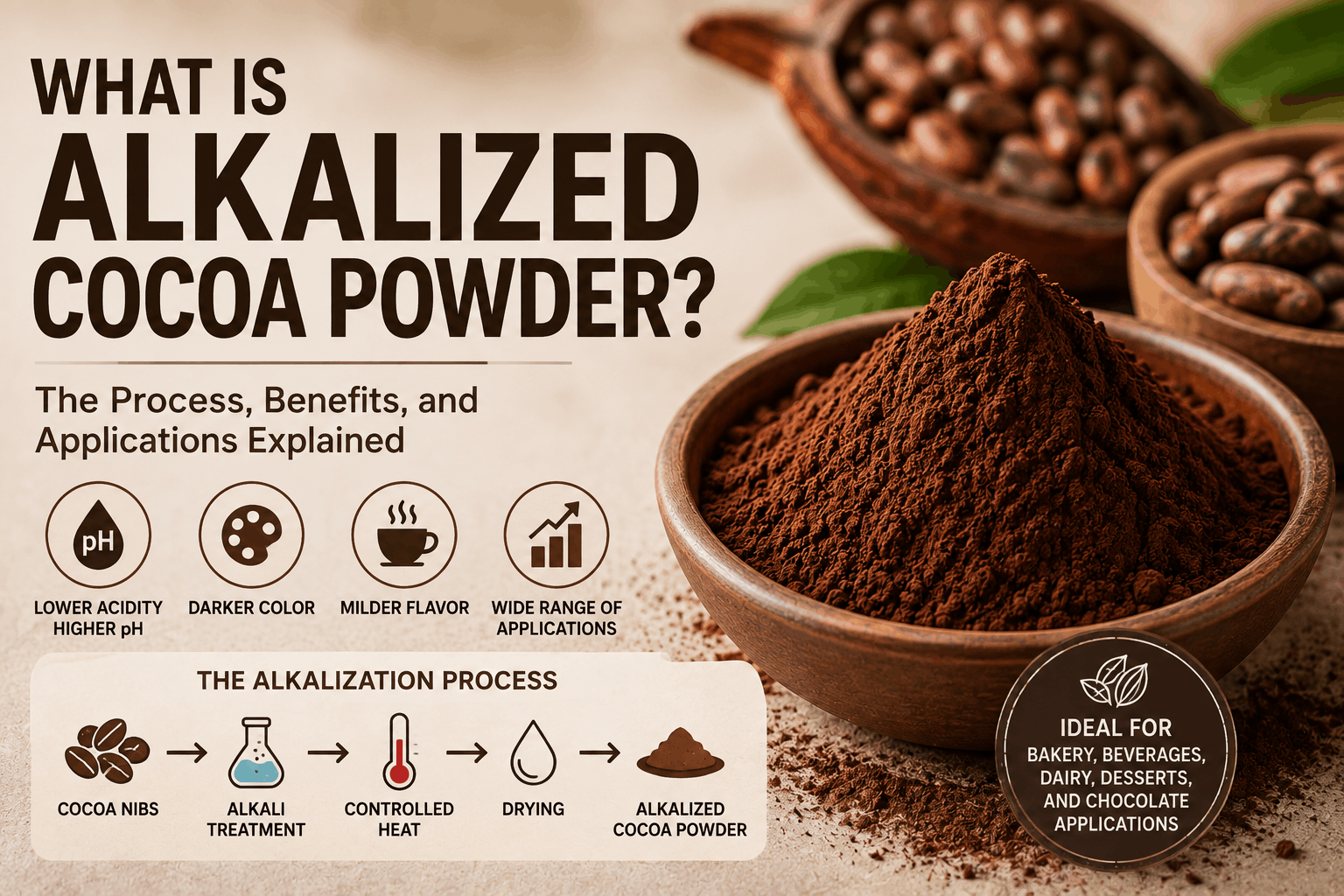
Alkalized cocoa powder, also known as Dutch-process cocoa, undergoes an additional processing step called alkalization. During this process, cocoa nibs, cocoa liquor, or cocoa cake are treated with approved food grade alkaline compounds such as potassium carbonate to reduce acidity and modify the product’s color and flavor.
Key Characteristics
- Medium brown to very dark brown or black
- Neutral to slightly alkaline pH (approximately 6.8–8.0, depending on processing)
- Milder and smoother chocolate flavor
- Lower acidity
- Better dispersibility and solubility in many beverage applications
Natural vs Alkalized Cocoa Powder Comparison
| Feature | Natural Cocoa Powder | Alkalized Cocoa Powder |
|---|---|---|
| Processing | Standard cocoa processing | Additional alkalization (Dutch Process) |
| pH | Approximately 5.0–6.0 | Approximately 6.8–8.0 |
| Color | Light to medium brown | Dark brown to black |
| Flavor | Fruity, sharp, slightly bitter | Smooth, mellow, less acidic |
| Solubility | Moderate | Better in many beverage applications |
| Baking Reaction | Works well with baking soda | Usually paired with baking powder |
| Common Applications | Cakes, cookies, brownies | Beverages, ice cream, chocolate fillings, bakery, confectionery |
How Alkalization Changes Cocoa Powder
Alkalization is more than a color adjustment. It changes several physical and sensory properties of cocoa powder.
During the process:
- Acidity decreases.
- Color becomes darker.
- Chocolate flavor becomes smoother and less astringent.
- Dispersibility in liquids generally improves.
- Some naturally occurring polyphenols and flavanols are reduced as processing intensity increases.
Because manufacturers can control the degree of alkalization, different cocoa powders may range from light reddish-brown to deep black.
Which Cocoa Powder Is Better?
Neither type is universally better. The right choice depends on the intended application.
Choose Natural Cocoa Powder if you need:
- Bright chocolate flavor
- Natural cocoa characteristics
- Recipes using baking soda
- Higher retention of naturally occurring cocoa compounds
Choose Alkalized Cocoa Powder if you need:
- Darker appearance
- Smoother flavor profile
- Better color consistency
- Improved dispersion in beverage mixes
- Premium visual presentation for bakery and confectionery products
Common Industrial Applications
Natural Cocoa Powder
Natural cocoa powder is commonly used in:
- Cookies
- Brownies
- Muffins
- Chocolate cakes
- Breakfast cereals
- Protein foods
- Nutritional products
Alkalized Cocoa Powder
Alkalized cocoa powder is widely used in:
- Instant chocolate drinks
- Ice cream
- Premium chocolate desserts
- Chocolate sauces
- Biscuit fillings
- Bakery mixes
- Confectionery coatings
Its darker color and smoother flavor make it especially popular for premium food products.
Can You Substitute One for the Other?
Natural and alkalized cocoa powder are not always interchangeable.
In baked products, the acidity of natural cocoa powder reacts with baking soda to produce carbon dioxide, helping doughs and batters rise. Replacing it with alkalized cocoa powder without adjusting the recipe may affect volume, texture, and flavor.
For products such as beverages, puddings, sauces, or ice cream, substitution is generally easier because leavening reactions are not involved.
Factors Buyers Should Consider
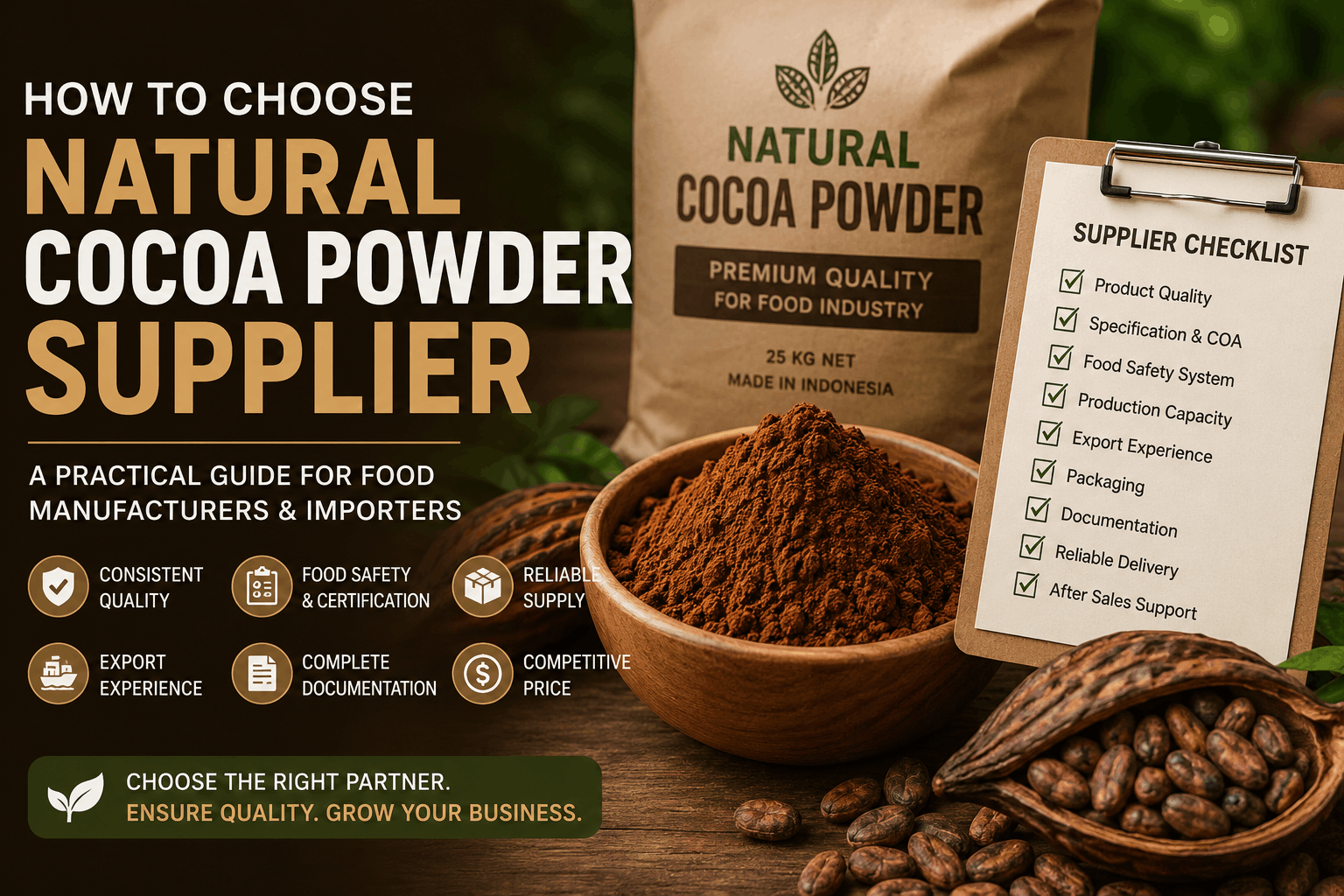
When sourcing cocoa powder for industrial use, buyers should evaluate more than color alone.
Important specifications include:
- Fat content
- pH
- Moisture content
- Particle size
- Color value
- Microbiological standards
- Heavy metal compliance
- Application suitability
Working with a supplier that provides a Certificate of Analysis (COA) and consistent product specifications helps ensure reliable production performance.
Conclusion
Natural and alkalized cocoa powder originate from the same cocoa bean, but their processing creates distinct functional and sensory characteristics.
Natural cocoa powder offers a brighter, more acidic chocolate flavor and is ideal for recipes that rely on baking soda. Alkalized cocoa powder undergoes Dutch processing to reduce acidity, resulting in a darker color, smoother taste, and improved performance in many beverage and confectionery applications.
Understanding these differences enables food manufacturers, importers, and product developers to choose the cocoa powder that best matches their technical requirements and desired product characteristics.
Frequently Asked Questions (FAQ)
Is Dutch-process cocoa the same as alkalized cocoa?
Yes. Dutch-process cocoa is another name for alkalized cocoa powder because it is produced through an alkalization process.
Which cocoa powder has a darker color?
Alkalized cocoa powder typically has a darker color, ranging from dark brown to black depending on the degree of alkalization.
Can natural cocoa powder replace alkalized cocoa powder?
Sometimes, but not always. In baked goods, substituting one for the other may require adjusting the leavening agents because their pH levels differ.
Why do beverage manufacturers often prefer alkalized cocoa powder?
Alkalized cocoa powder generally provides a smoother flavor, darker appearance, and better dispersibility in liquid formulations.
Does alkalization affect cocoa’s natural compounds?
Yes. Research indicates that alkalization can reduce the concentration of certain naturally occurring compounds, including flavanols and polyphenols, with the extent depending on the processing conditions.
References
- International Cocoa Organization (ICCO). Processing Cocoa – Explanation of cocoa processing, cocoa liquor pressing, and the optional alkalization (Dutch process).
- De Taeye, C. et al. Changes in Cocoa Properties Induced by the Alkalization Process: A Review.Comprehensive Reviews in Food Science and Food Safety. Review of the effects of alkalization on cocoa’s physicochemical, nutritional, functional, and sensory properties.
- Iowa State University Extension and Outreach. Natural vs Dutch-Processed Cocoa – Explanation of pH differences, baking functionality, and practical applications.