Cocoa Powder Color Guide for Food Manufacturers
Color is one of the first quality attributes buyers notice when evaluating cocoa powder. Whether the cocoa powder is intended for bakery products, chocolate beverages, dairy products, confectionery, or desserts, its color influences consumer perception and product consistency.
However, cocoa powder color is not simply a cosmetic characteristic. It reflects how the cocoa has been processed and can provide valuable information about alkalization level, formulation suitability, and expected performance in food applications.
This guide explains what determines cocoa powder color, how manufacturers classify different shades, and how buyers can choose the most suitable color for their products.
Why Does Cocoa Powder Color Matter?
Color is an important quality specification because it affects:
- Product appearance
- Consumer expectations
- Brand consistency
- Visual appeal
- Product formulation
Consumers often associate darker cocoa powders with richer chocolate flavor, although color alone does not determine taste.
For manufacturers, maintaining consistent color between production batches is essential for delivering uniform products to the market.
What Determines Cocoa Powder Color?
Several factors influence the final color of cocoa powder.
1. Cocoa Bean Variety
Different cocoa varieties naturally produce slightly different shades of cocoa after fermentation and roasting.
Although variety contributes to color differences, it generally has less influence than processing conditions.
2. Fermentation
Proper fermentation develops flavor precursors while also influencing pigment formation within cocoa beans.
Insufficient fermentation may result in lighter color and less developed chocolate flavor.
3. Roasting
Roasting initiates Maillard reactions and caramelization, producing darker pigments while developing the characteristic chocolate aroma.
Higher roasting intensity generally produces darker cocoa materials, although excessive roasting may negatively affect flavor.
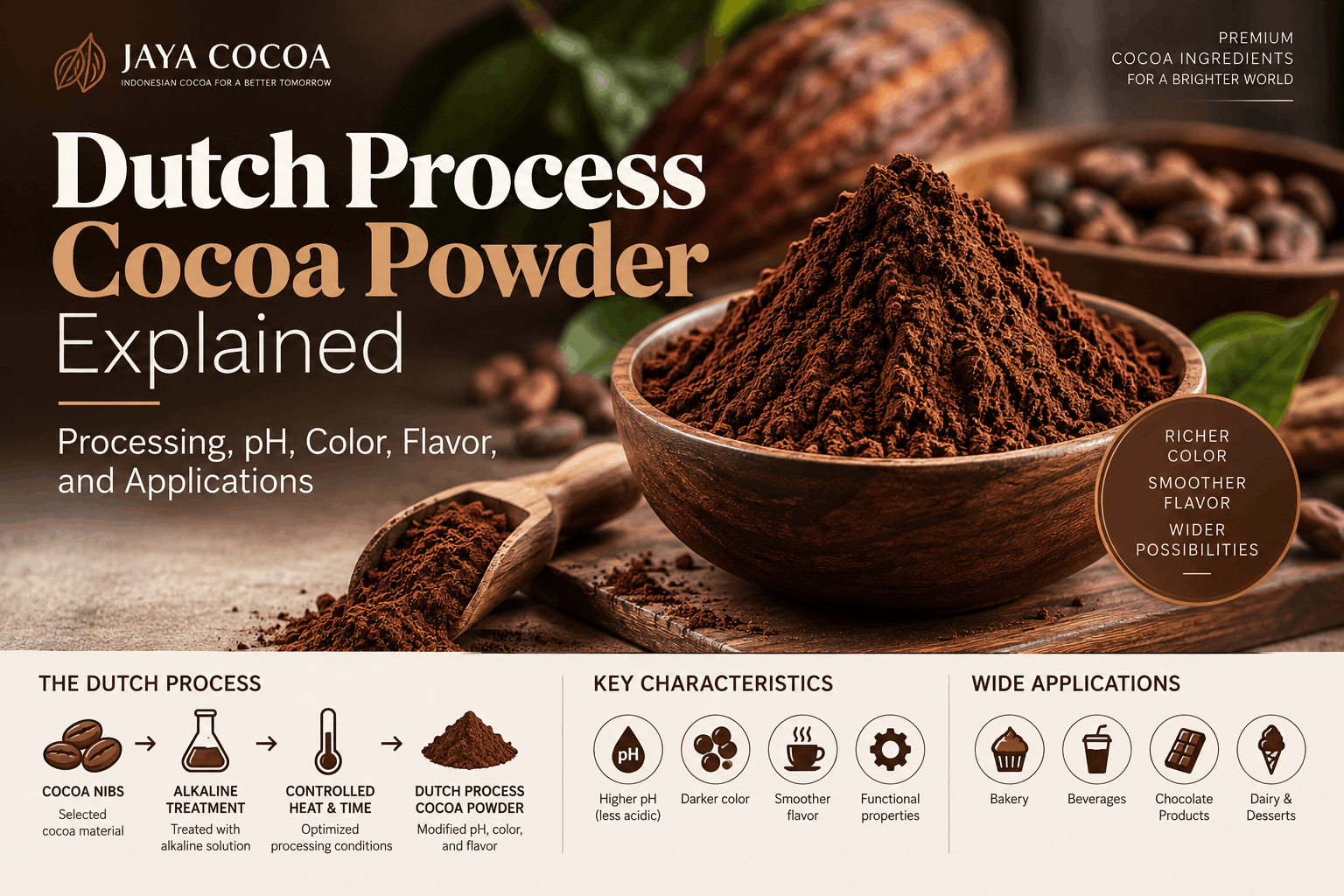
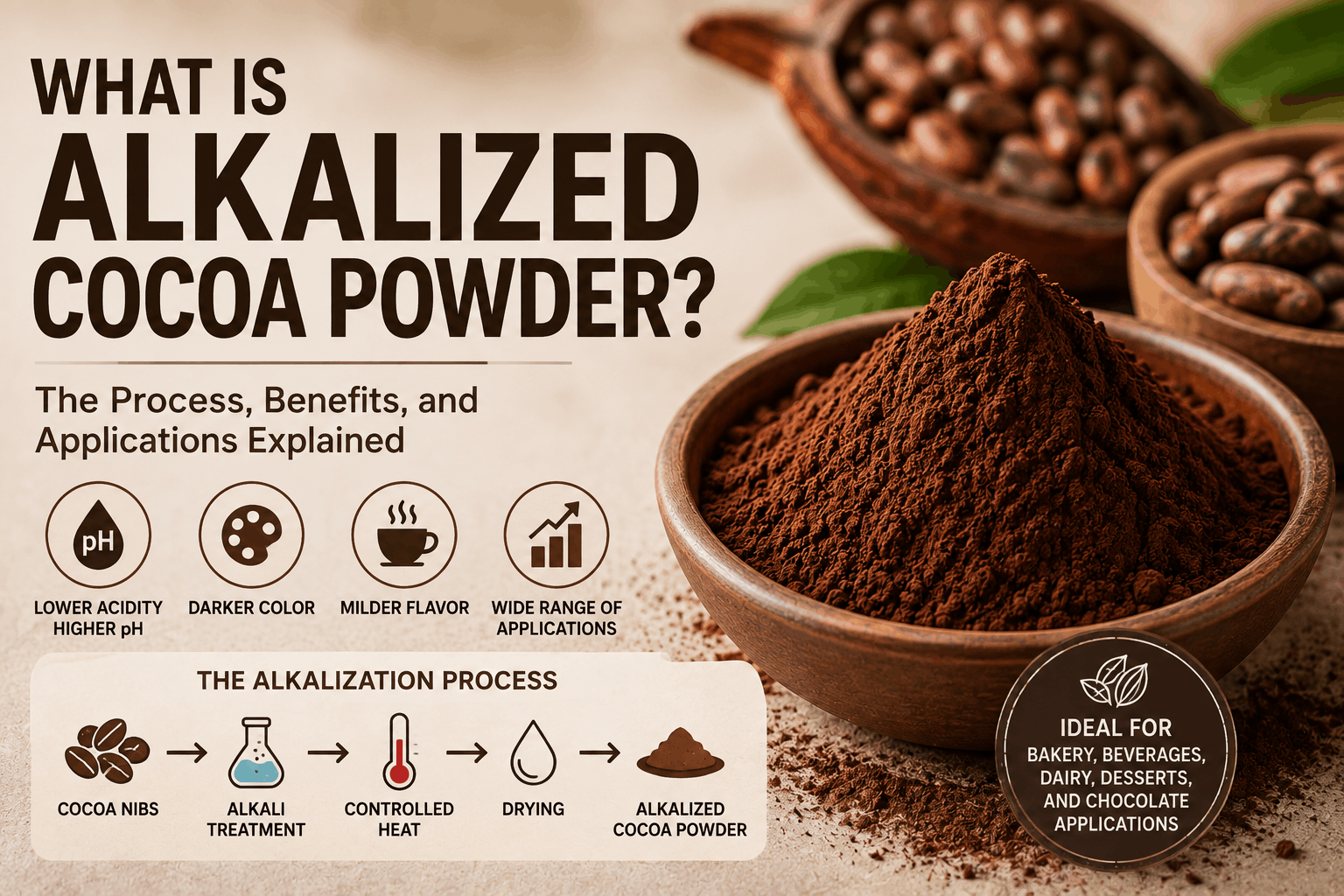
4. Alkalization (Dutch Process)
The most significant factor affecting cocoa powder color is alkalization, also known as the Dutch process.
During alkalization, food-grade alkaline compounds such as potassium carbonate reduce cocoa acidity and modify its natural pigments.
As the degree of alkalization increases:
- Color becomes darker.
- Acidity decreases.
- Flavor becomes smoother.
- Dispersibility generally improves.
For this reason, alkalized cocoa powders are commonly available in a range of colors from medium brown to dark brown and black.
Typical Cocoa Powder Color Classification
Although there is no single international color scale used by every manufacturer, cocoa powder is commonly marketed using commercial color categories.
| Color Category | Typical Appearance | Common Applications |
|---|---|---|
| Light Brown | Natural cocoa | Cakes, brownies, cookies |
| Medium Brown | Light alkalized | Bakery, chocolate beverages |
| Dark Brown | Medium alkalized | Ice cream, biscuits, fillings |
| Very Dark Brown | Strong alkalized | Premium desserts, confectionery |
| Black | Highly alkalized | Sandwich biscuits, decorative bakery products |
Manufacturers may also use laboratory color measurements (such as the CIE L*a*b* system) to ensure batch-to-batch consistency.
Natural vs Alkalized Cocoa Powder Color
Natural cocoa powder generally has a lighter brown color because it retains its natural acidity.
Alkalized cocoa powder undergoes chemical treatment that darkens the cocoa pigments.
| Characteristic | Natural Cocoa Powder | Alkalized Cocoa Powder |
|---|---|---|
| Color | Light brown | Medium brown to black |
| pH | Acidic | Neutral to alkaline |
| Flavor | Fruity, slightly acidic | Smooth, mellow |
| Applications | Bakery, cakes | Beverages, confectionery, desserts |
The darker appearance of alkalized cocoa powder is one of the main reasons it is preferred for premium chocolate beverages and visually rich bakery products.
Does Darker Cocoa Powder Mean Better Quality?
Not necessarily.
A darker cocoa powder is not automatically higher quality.
Color should always be evaluated together with other technical specifications, including:
- Fat content
- pH
- Moisture content
- Particle size
- Flavor profile
- Microbiological safety
- Heavy metal compliance
The most appropriate cocoa powder is the one that matches the intended product formulation rather than simply having the darkest color.
Choosing the Right Color for Different Food Applications
Different products benefit from different cocoa powder colors.
| Food Application | Recommended Color |
|---|---|
| Chocolate Cake | Light to Medium Brown |
| Brownies | Medium Brown |
| Cookies | Medium to Dark Brown |
| Instant Chocolate Drinks | Dark Brown |
| Ice Cream | Dark Brown |
| Chocolate Fillings | Dark Brown |
| Sandwich Biscuits | Black Cocoa Powder |
Selecting the correct color helps manufacturers achieve consistent product appearance while minimizing formulation adjustments.
How Manufacturers Measure Cocoa Powder Color
Large-scale cocoa manufacturers typically evaluate color using instrumental methods rather than visual inspection alone.
The most widely used approach is the CIE L*a*b* color system, which measures:
- L* — Lightness (black to white)
- a* — Green to red
- b* — Blue to yellow
Instrumental color measurement improves consistency between production batches and helps manufacturers meet customer specifications.
Why Buyers Should Request Color Specifications
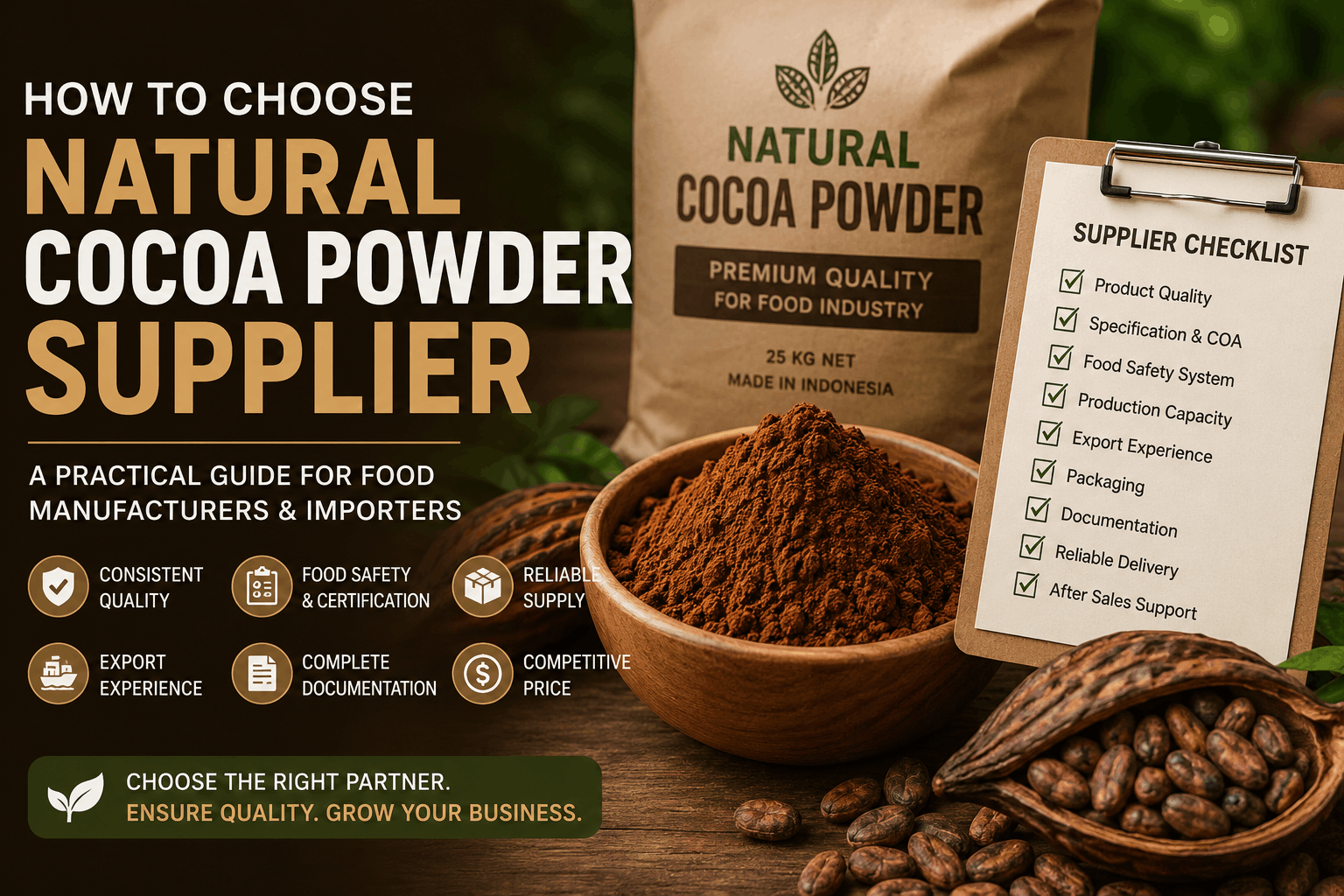
When purchasing cocoa powder, buyers should request:
- Certificate of Analysis (COA)
- Product specification sheet
- Color classification
- pH
- Fat content
- Moisture content
These specifications help ensure that every shipment performs consistently in industrial production.
Conclusion
Cocoa powder color is far more than an aesthetic characteristic. It reflects processing conditions, particularly the degree of alkalization, and influences consumer perception, product appearance, and formulation decisions.
Rather than selecting the darkest cocoa powder available, food manufacturers should evaluate color together with pH, fat content, flavor profile, and other quality parameters to ensure the ingredient meets the technical requirements of the final product.
Understanding cocoa powder color enables manufacturers and buyers to make more informed purchasing decisions and produce food products with consistent quality.
Frequently Asked Questions (FAQ)
Why is alkalized cocoa powder darker?
Because alkalization modifies the natural pigments in cocoa and reduces acidity, producing progressively darker shades depending on the degree of processing.
Is black cocoa powder naturally black?
No. Black cocoa powder is produced through a much stronger alkalization process than standard Dutch-process cocoa, giving it its distinctive dark appearance.
Does darker cocoa powder have a stronger chocolate flavor?
Not always. Darker color often results from alkalization, which generally creates a smoother and less acidic flavor, but flavor intensity depends on several factors beyond color alone.
How do manufacturers maintain consistent cocoa powder color?
Manufacturers use standardized processing conditions and laboratory color measurements, such as the CIE L*a*b* color system, to control consistency between batches.
References
- International Cocoa Organization (ICCO). Processing Cocoa – Overview of cocoa processing and alkalization.
- Beckett, S. T., Fowler, M. S., & Ziegler, G. R. (2017). Beckett’s Industrial Chocolate Manufacture and Use (5th Edition). Wiley-Blackwell.
- De Taeye, C., et al. Changes in Cocoa Properties Induced by the Alkalization Process: A Review.Comprehensive Reviews in Food Science and Food Safety. Explains how alkalization affects cocoa color, flavor, and physicochemical properties.
- CIE – Colorimetry (International Commission on Illumination). International reference for the CIE L*a*b* color measurement system.