Cocoa Powder Manufacturing Process Explained Step by Step
Cocoa powder is one of the most widely used ingredients in the global food industry. It is found in chocolate, bakery products, beverages, ice cream, confectionery, dairy products, and nutritional foods. Although it appears to be a simple brown powder, producing high-quality cocoa powder requires a carefully controlled manufacturing process.
Understanding how cocoa powder is produced helps food manufacturers, distributors, and importers evaluate product quality, select the right specifications, and choose reliable suppliers.
This guide explains each stage of the cocoa powder manufacturing process, from cocoa bean harvesting to the final packaged product.
Harvesting Cocoa Pods
The process begins with harvesting ripe cocoa pods from Theobroma cacao trees. Mature pods are carefully cut from the tree to avoid damaging future flowering points.
Each pod contains approximately 30–50 cocoa beans surrounded by sweet white pulp.
The quality of the final cocoa powder depends heavily on harvesting only fully mature pods.
Fermentation
After harvesting, the cocoa beans are removed from the pods and placed into wooden boxes or covered heaps for fermentation.
Fermentation generally lasts 5–7 days, depending on the cocoa variety and local conditions.
This is one of the most critical stages because it develops the flavor precursors that later become the characteristic chocolate aroma during roasting.
Poor fermentation often results in flat, bitter, or astringent cocoa products.
Drying
Freshly fermented cocoa beans contain around 55% moisture.
To prevent mold growth and allow safe storage, the beans are dried until the moisture content is reduced to approximately 7%.
Drying may be carried out using natural sunlight or mechanical dryers, depending on production capacity and climate conditions.
Proper drying helps preserve bean quality while minimizing defects.
Cleaning and Sorting
Before processing, cocoa beans are cleaned to remove foreign materials such as stones, dust, sticks, metal fragments, and damaged beans.
The beans are then sorted based on size and quality to ensure consistent processing.
Effective cleaning not only improves product quality but also protects processing equipment from damage.
Roasting
Roasting is one of the most important stages in cocoa manufacturing.
During roasting:
- Moisture is further reduced.
- Chocolate aroma develops.
- Unwanted microorganisms are eliminated.
- Bean shells become easier to remove.
Roasting conditions vary depending on the desired flavor profile and the final cocoa product.
Cracking and Winnowing
After roasting, cocoa beans are cracked to separate the outer shell from the edible cocoa nib.
This process is called winnowing.
The nib contains the cocoa solids and cocoa butter that will later be processed into cocoa liquor and cocoa powder.
Removing the shell is essential because it improves product purity and consistency.
Grinding into Cocoa Liquor
The cocoa nibs are ground into a thick paste known as cocoa liquor (also called cocoa mass).
Despite its name, cocoa liquor contains no alcohol. It is simply finely ground cocoa nibs containing both cocoa solids and cocoa butter.
At this stage, the product has a smooth, semi-liquid consistency due to the natural cocoa butter.
Pressing the Cocoa Liquor
The cocoa liquor is transferred to hydraulic presses operating under very high pressure.
This process separates:
- Cocoa butter, a valuable ingredient used in chocolate and cosmetics.
- Cocoa cake, the solid material remaining after most of the cocoa butter has been removed.
The amount of butter extracted determines the final fat content of the cocoa powder.
Grinding the Cocoa Cake
The cocoa cake is cooled and milled into a fine powder using industrial grinding equipment.
Particle size is carefully controlled to ensure good flowability, smooth texture, and consistent performance in food applications.
Depending on customer requirements, the powder may be classified into different particle sizes suitable for beverages, bakery products, or industrial chocolate manufacturing.
Alkalization (Optional)
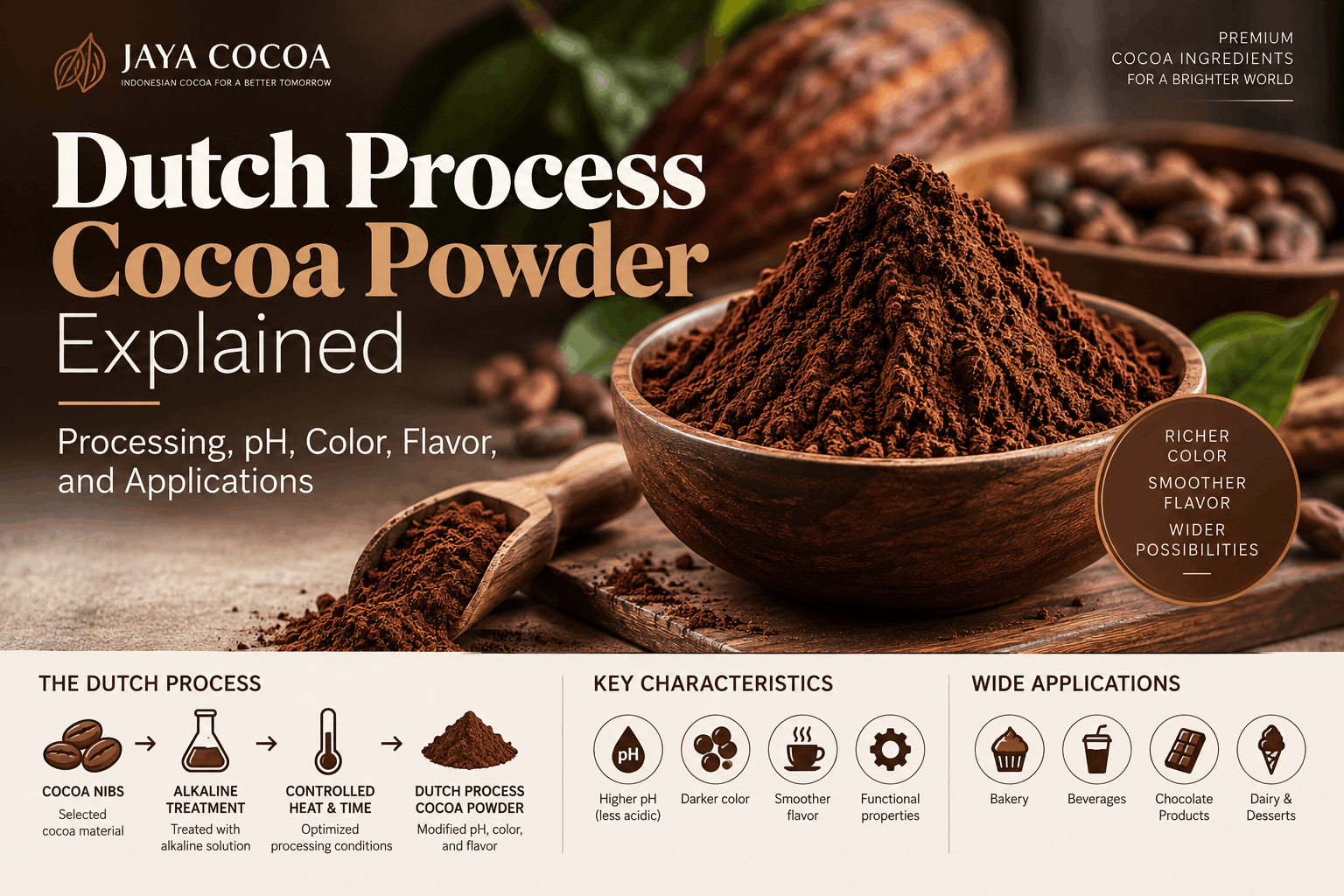
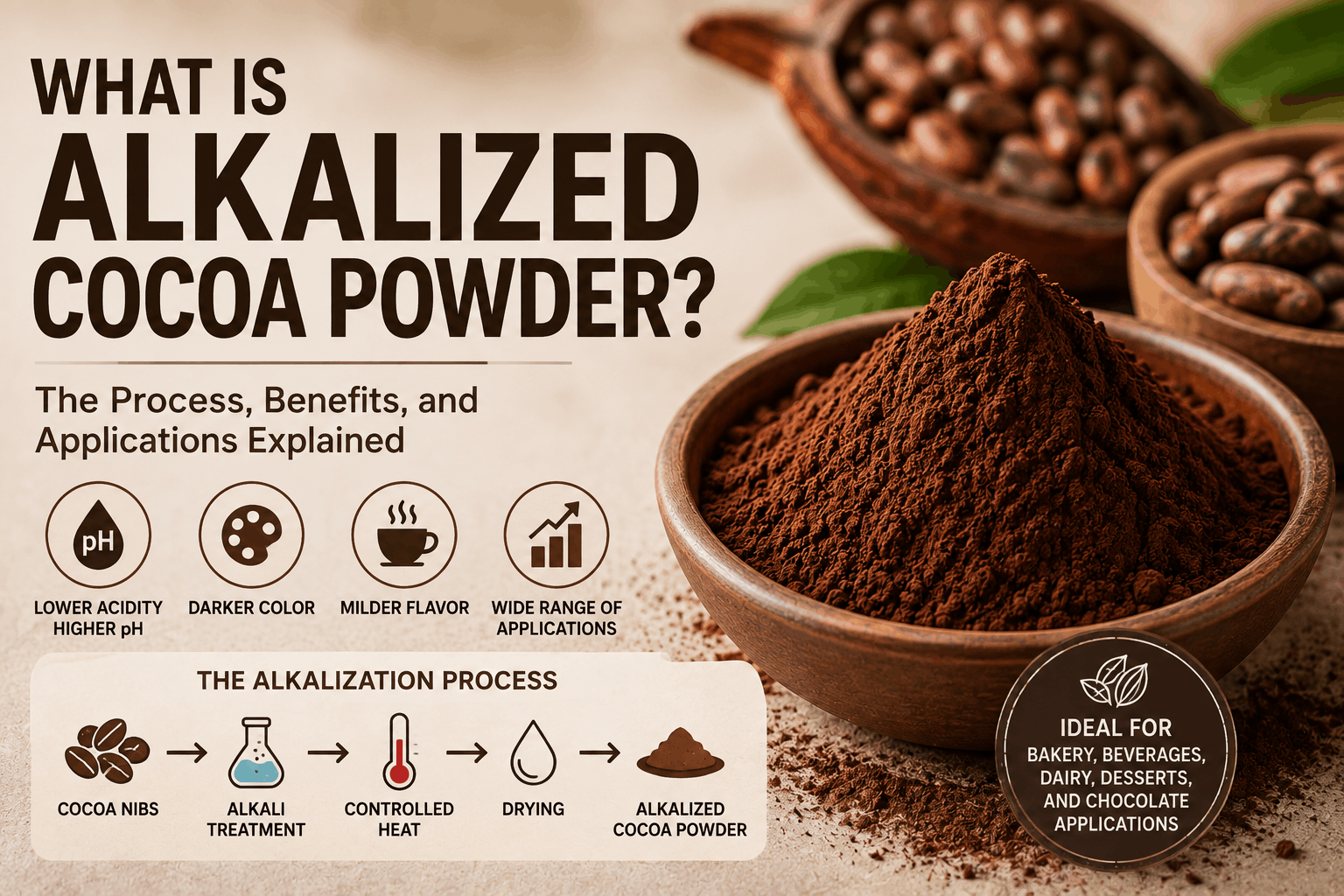
Some cocoa powders undergo an additional process called alkalization, also known as the Dutch Process.
During this stage, cocoa material is treated with food-grade alkaline agents such as potassium carbonate.
The purpose is to:
- Reduce acidity.
- Improve solubility.
- Create darker colors.
- Produce a smoother chocolate flavor.
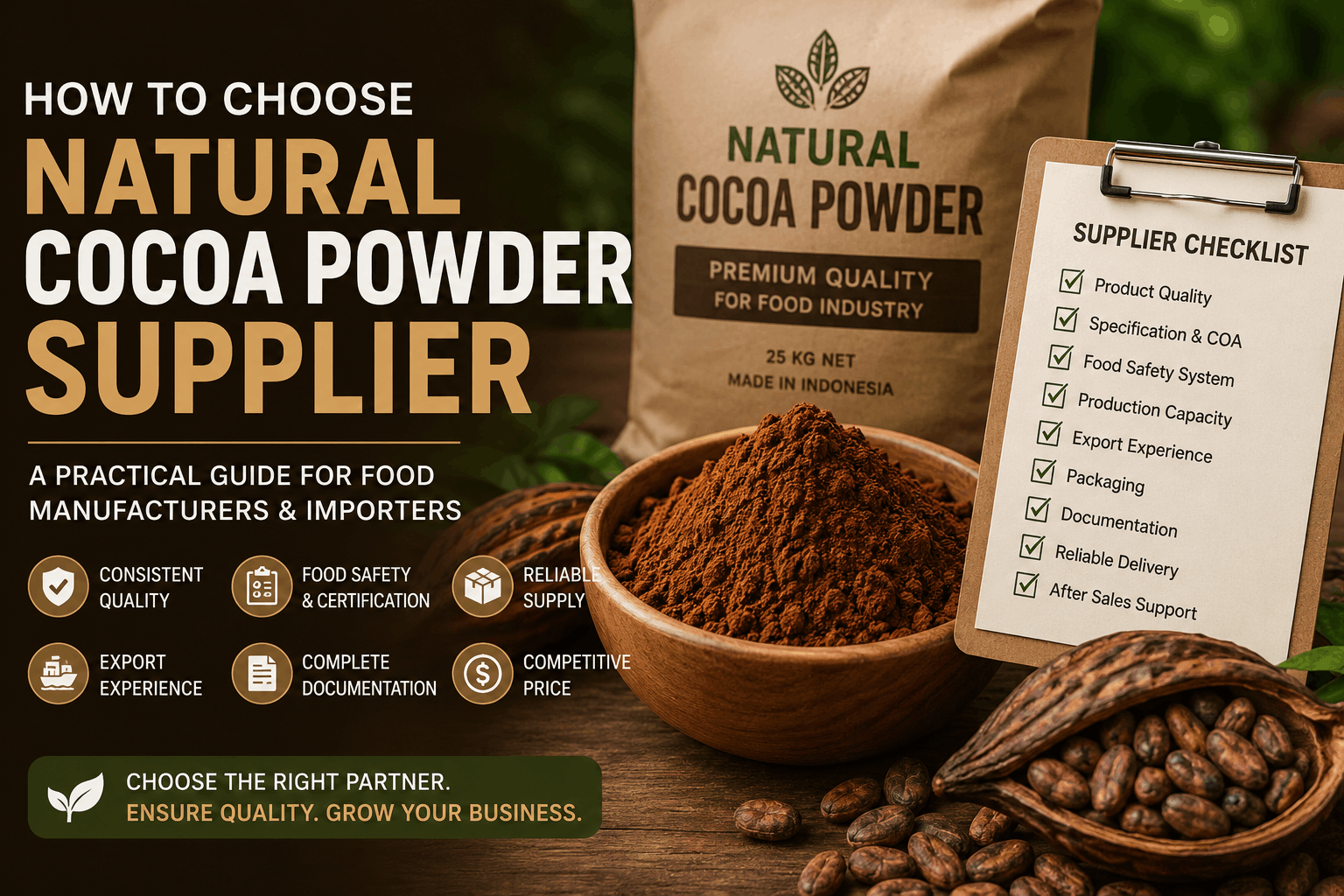
Not all cocoa powders are alkalized. Natural cocoa powder skips this step and retains its natural acidity and lighter brown color.
Quality Control
Before packaging, manufacturers perform comprehensive quality control tests.
Typical parameters include:
- Moisture content
- Fat content
- pH
- Particle size
- Color
- Microbiological safety
- Heavy metal compliance
- Sensory evaluation
Consistent quality control ensures the cocoa powder meets customer specifications and international food safety requirements.
Packaging and Distribution
The finished cocoa powder is packed according to customer requirements.
Common packaging options include:
- 25 kg paper bags with PE liner
- Bulk industrial packaging
- Private label retail packaging
The product is then stored in a cool, dry warehouse before shipment to domestic and international customers.
Proper storage helps maintain product quality throughout its shelf life.
Why the Manufacturing Process Matters
Every stage of cocoa processing influences the final product.
For example:
- Better fermentation creates richer chocolate flavor.
- Controlled roasting develops aroma without burning the beans.
- Proper pressing determines cocoa butter content.
- Fine grinding improves texture and dispersion.
- Effective quality control ensures consistency from batch to batch.
Understanding these processes allows buyers to make better purchasing decisions and select suppliers capable of delivering consistent product quality.
Conclusion
Producing cocoa powder is a combination of agricultural expertise, food processing technology, and strict quality control.
From harvesting cocoa pods to grinding cocoa cake into fine powder, each manufacturing stage contributes to the flavor, color, texture, and performance of the final product.
For food manufacturers and importers, understanding this process provides valuable insight when evaluating suppliers, comparing product specifications, and selecting the right cocoa powder for industrial applications.
Frequently Asked Questions (FAQ)
What is cocoa powder made from?
Cocoa powder is made from cocoa beans that are fermented, dried, roasted, ground into cocoa liquor, pressed to remove most of the cocoa butter, and milled into a fine powder.
Why is fermentation important?
Fermentation develops the flavor precursors responsible for the characteristic chocolate taste and aroma.
What is the difference between natural and alkalized cocoa powder?
Natural cocoa powder is acidic and has a lighter brown color, while alkalized cocoa powder is treated with alkaline solutions to reduce acidity, improve solubility, and produce a darker color.
What products use cocoa powder?
Cocoa powder is widely used in chocolate, bakery products, beverages, dairy products, confectionery, ice cream, breakfast cereals, and nutritional foods.
References
- International Cocoa Organization (ICCO). Processing Cocoa – Overview of cocoa bean processing, roasting, winnowing, grinding, pressing, alkalization, and cocoa powder production.
- FAO / Codex Alimentarius – GSFA Food Category 05.1.1: Cocoa mixes (powders) and cocoa mass/cake, describing cocoa powder as the product obtained by pressing cocoa liquor and milling the resulting cocoa cake.